Urban Form: Carved Brackets
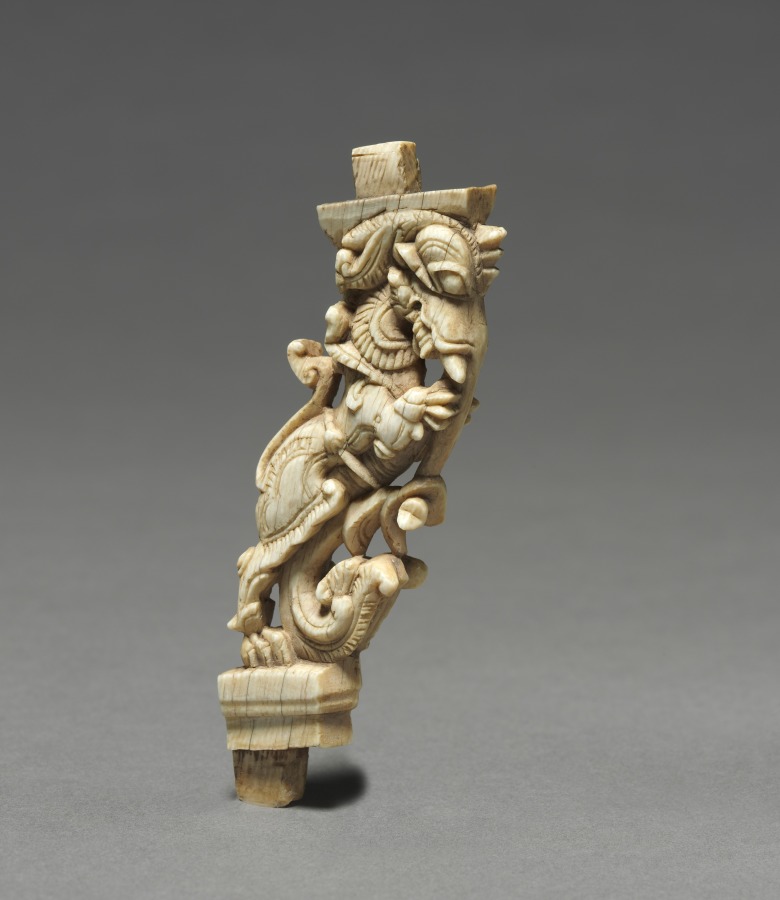
Structural Poetics: The Carved Bracket as Architectural Threshold
The carved bracket, in its most refined iteration, operates as a tectonic hinge—a point where load-bearing necessity transforms into ornamental logic. For the 2026 executive silhouette, this element is recontextualized as a structural metaphor for the urban professional’s dual existence: the visible weight of authority and the invisible grace of restraint. The bracket’s geometry, derived from the “Udumbara Flowers” wooden plaque, is not merely decorative but topological. Each carved petal is a negative space that defines the positive form, a principle directly translatable to garment construction. The shoulder line, for instance, becomes a cantilevered bracket—a sharp, horizontal projection that mimics the plaque’s wooden grain, where the fabric’s drape is the “void” against which the structure asserts itself.
The minimalist category is chosen because the bracket’s essence lies in subtraction. The “Udumbara” aesthetic—where the flower is a phantom bloom carved from a single block of wood—demands a silhouette that rejects superfluous seams. The jacket’s integral collar becomes a carved bracket in fabric: a folded, self-supporting arc that rises from the torso without lapel interruption. This is structural poetics at its most severe—a monolithic front panel that references the plaque’s unbroken surface, with the bracket’s “petals” translated into asymmetric darting that traces the body’s natural torsion. The Slate color, a deep, mineral gray, anchors this in urban materiality—a hue that absorbs light like aged bronze, echoing the “Mirror with Deities” copper patina.
Geometric Integrity: From Bronze Mirror to Fabric Tension
The Han dynasty bronze mirror introduces a counterpoint: its “full-field” composition—where the White Tiger, chariot, and deities spiral in a centripetal vortex—demands a different geometric logic. For the 2026 silhouette, this translates into radial tension. The bracket is no longer a static support but a dynamic vector. The executive coat employs a spiral-cut sleeve that wraps from the shoulder blade to the wrist, its seam mimicking the mirror’s rotational symmetry. The carved bracket here is the shoulder yoke, a crescent-shaped insert that lifts the fabric into a permanent, aerodynamic flutter—a frozen moment of the White Tiger’s leap.
The geometric integrity is maintained through precision engineering. The mirror’s high relief is translated into double-faced wool with a subtle, embossed pattern—a tactile topography visible only under raking light. The bracket’s structural role is inverted: instead of supporting weight, it redistributes tension across the garment’s zero-gravity zones. The lapel notch becomes a carved bracket in miniature, a negative-positive interplay where the fabric folds back on itself, creating a self-referential loop—a nod to the mirror’s infinite regress of deities and cosmic order.
Urban Materiality: The Dialectic of Wood and Bronze
The material dialogue between the wooden plaque and bronze mirror defines the urban palette. Slate is chosen for its chameleonic nature: it is the color of wet asphalt, of polished concrete, of the patina of time. The carved bracket in this context is a hybrid material—a wool-cashmere blend with a matte, stone-like finish, its surface micro-ribbed to mimic the plaque’s wood grain. The bronze mirror influence appears in metallic accents: a gunmetal zipper that traces the bracket’s curve, or a brass button engraved with a stylized White Tiger—a discreet emblem that only reveals itself upon close inspection.
The urban materiality is further defined by contrast. The “Udumbara” aesthetic of emptiness is rendered through unlined construction—a floating lining that moves independently from the outer shell, creating a hollow, resonant space between fabric layers. This is the void that the bracket carves. The “Mirror” aesthetic of fullness appears in dense, compact weaves that hold their shape like bronze casting. The executive trouser features a carved bracket waistband—a rigid, sculpted band that sits at the natural waist, its front panel asymmetrically folded to echo the mirror’s spiral composition.
The 2026 Executive Silhouette: A Synthesis of Opposites
The final silhouette is a dialectical resolution of the two artifacts. The carved bracket becomes the central organizing principle—a structural motif that appears in the shoulder, waist, and hem. The jacket is cropped, ending at the navel, its hem carved into a soft, asymmetrical curve that mirrors the plaque’s petal edges. The trousers are wide-legged, with a single, deep pleat that functions as a vertical bracket, channeling the mirror’s upward energy. The overall proportion is elongated—a vertical thrust that references the White Tiger’s leap, but grounded by the horizontal weight of the carved shoulder.
This is minimalist luxury at its most architectural. The carved bracket is not an ornament but a structural truth—a visible joint that reveals how the garment is built. The Slate color ensures that the silhouette reads as a monolithic volume, a single, carved form that moves through the city like a living sculpture. The urban professional wearing this is not merely dressed; they are encased in a philosophy—a wearable dialectic of emptiness and fullness, of static wood and dynamic bronze, of the finite bracket and the infinite cosmos.