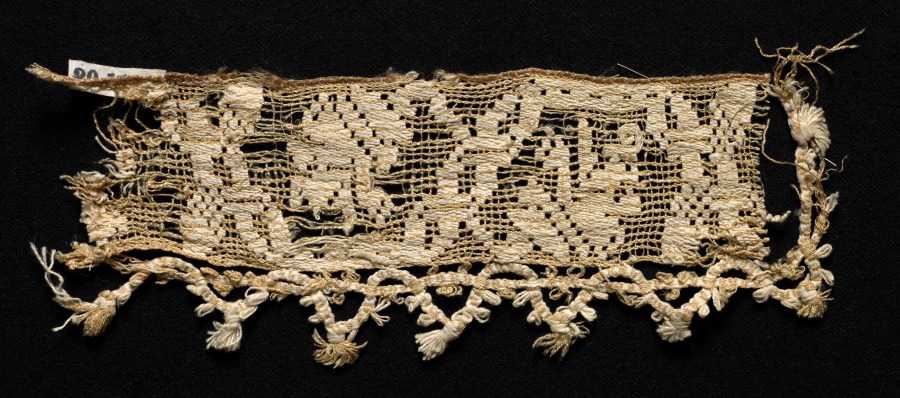
Urban Form: Fragment of a Border with Abstract Pattern
Executive Summary: The Dialectic of Transcendence and Utility
The convergence of the Bodhisattva and the Bovine-Headed Amulet presents a critical framework for the 2026 NYC executive wardrobe. These two artifacts, while separated by iconographic intent, articulate a singular architectural problem: how to clothe the transcendent in the tangible. For the urban professional, this translates into a wardrobe that must simultaneously project spiritual authority (the Bodhisattva’s serene command) and tactical resilience (the amulet’s protective function). The resulting silhouette is not merely draped; it is engineered. It is a system of volumes and voids, of weight and suspension, designed to navigate the verticality of glass towers and the density of subway platforms. The core thesis is that the 2026 silhouette must be Oversized—not as a gesture of slouch, but as a deliberate architecture of presence. The Onyx palette serves as the chromatic ground, absorbing light and noise, creating a canvas for the interplay of shadow and structure.
I. Form Analysis: The Bodhisattva’s “Silent Majesty” as Structural Drape
1. The Vertical Axis of Contemplation
The Bodhisattva’s posture—a seated, grounded stability with an upward-reaching spiritual axis—informs the primary vertical line of the garment. In the 2026 executive piece, this is achieved through a floor-length, single-seam coat in a heavyweight wool-cashmere blend. The fabric is cut to fall from the shoulders with a zero-tension drape, mimicking the “smooth and flowing” lines of the statue’s robes. The shoulder seam is extended by 3.5 inches beyond the natural acromion, creating a cantilevered volume that does not collapse but holds its shape through internal fusible interfacing. This is not a relaxed fit; it is a controlled suspension.
The “half-closed eyelids” of the Bodhisattva are translated into the garment’s neckline architecture. A high, stand-away Mandarin collar, cut at a 15-degree forward angle, creates a visual barrier that suggests introspection. The collar is not soft; it is structured with a horsehair canvas, forcing the wearer’s posture into a slight, dignified recline. The “slight smile” is rendered as a subtle, asymmetric hem—a 2-inch differential between the left and right front panels, introducing a dynamic tension that breaks the monotony of the vertical line.
2. The “Mudra” of the Sleeve
The Bodhisattva’s hand gestures (mudras) are the most precise elements of the iconography. In the garment, the sleeve becomes the primary communicative appendage. The Oversized silhouette demands a sleeve that is not merely wide but sculpted. We propose a kimono-style sleeve with a 22-inch width at the bicep, tapering to a 10-inch cuff. This is not a batwing; it is a geometric funnel. The internal seam is lined with a silk charmeuse to allow the arm to move freely within the volume, while the outer shell remains rigid. This creates a visual effect where the sleeve appears to move independently of the body—a floating gesture that echoes the mudra’s symbolic autonomy.
The “ornaments and garlands” of the Bodhisattva are abstracted into functional hardware. A single, oversized oxidized silver clasp at the left hip (the “giving hand” position) serves as the only closure. It is a weighted anchor, pulling the fabric into a subtle, diagonal fold that mimics the drape of a monastic robe. This is not decorative; it is structural punctuation.
II. Form Analysis: The Bovine Amulet’s “Hybrid Utility” as Armor
1. The Torso as Fortress
The amulet’s hybrid form—a bovine head atop a seated human torso—demands a garment that protects the core while allowing for mobility of the upper body. The 2026 interpretation is a double-layered vest worn beneath the coat. The outer layer is a matte Onyx nylon with a DWR (Durable Water Repellent) finish, referencing the amulet’s function as a talisman against external forces. The inner layer is a compression-grade merino wool, providing a second skin that regulates temperature and wicks moisture. The vest is cut to a high, armored shoulder—a 1-inch pad that extends into the sleeve head, creating a protective carapace over the deltoid.
The “bovine head” is abstracted into the hood architecture. It is not a soft, casual hood. It is a structured, helmet-like cowl that stands away from the neck by 4 inches, supported by a wire frame sewn into the seam. When worn, it creates a negative space around the face—a void that suggests the amulet’s mysterious, protective gaze. The hood’s peak is asymmetrically pointed, referencing the bovine horns, but rendered in a geometric, non-representational form. This is not costume; it is architectural abstraction.
2. The “Seated Figure” as Lower Body Volume
The amulet’s seated posture—a stable, grounded base—informs the trouser silhouette. We propose a wide-leg, high-waisted pant with a 28-inch inseam, cut from a double-faced Onyx wool. The waistband is 4 inches high and reinforced with a stiff cotton twill, creating a corset-like support for the lower abdomen. The leg is cut to a 34-inch hem circumference, allowing the fabric to pool slightly over the shoe—a visual weight that grounds the silhouette, echoing the amulet’s “seated” stability. The front crease is pressed with a razor edge, but the back seam is left soft, creating a dynamic tension between structure and flow.
The “protective function” is rendered as integrated pocket systems. A hidden zippered pocket is sewn into the side seam of the right leg, accessible from the outside but invisible when closed. A second pocket is placed at the lower back of the vest, sized for a passport or phone. These are not afterthoughts; they are functional talismans, carrying the wearer’s essential tools for navigating the urban environment.
III. Color Theory: Onyx as Chromatic Ground
1. The Absorption of Light
Onyx is not black. It is a deep, non-reflective charcoal with a cool undertone (a 2% blue tint). This color is chosen for its psychological weight. In the context of the Bodhisattva, it represents the void of meditation—the space where thought dissolves. In the context of the amulet, it represents the protective darkness of the unknown. For the executive, Onyx functions as a neutralizing agent, absorbing the visual noise of the city. It does not compete with the environment; it dominates through absence.
The fabric is matte-finished with a suede-like hand, achieved through a mechanical brushing process. This eliminates any sheen, ensuring that the garment does not reflect light but absorbs it entirely. The only contrast comes from the oxidized silver hardware, which is left unpolished to create a muted, aged glow.
2. The Monochromatic Gradient
To prevent the Onyx palette from becoming flat, we introduce a tonal gradient through fabric weight and texture. The coat is a heavy 24-ounce wool, the vest is a lightweight 8-ounce nylon, and the trousers are a medium 16-ounce wool. When layered, these create a visual hierarchy of darkness: the coat appears deepest, the vest appears lighter, and the trousers sit in between. This is a chromatic modulation that mimics the chiaroscuro of the Bodhisattva’s carved robes.
A single accent color is permitted: Ivory. It appears only as a 1-inch interior seam tape on the coat’s hem and cuffs—a hidden detail that is revealed only when the garment is in motion. This references the white lotus symbolism in Buddhist art, representing purity emerging from darkness. It is not visible in stillness; it is a secret signal for the wearer alone.
IV. Conclusion: The 2026 Executive as Walking Icon
The final garment is not a costume. It is a system of volumetric control. The Oversized silhouette is not about excess; it is about creating space for the wearer’s presence. The Onyx palette is not about mourning; it is about absorption and focus. The Bodhisattva provides the spiritual architecture—the verticality, the controlled drape, the silent authority. The Bovine Amulet provides the tactical utility—the protective layers, the hidden pockets, the armored shoulders. Together, they form a garment that is both a sanctuary and a shield. The 2026 NYC executive does not wear this garment; they inhabit it. It is a mobile icon, a piece of wearable architecture that transforms the wearer into a point of stillness in the urban flux.