Urban Form: Dawn
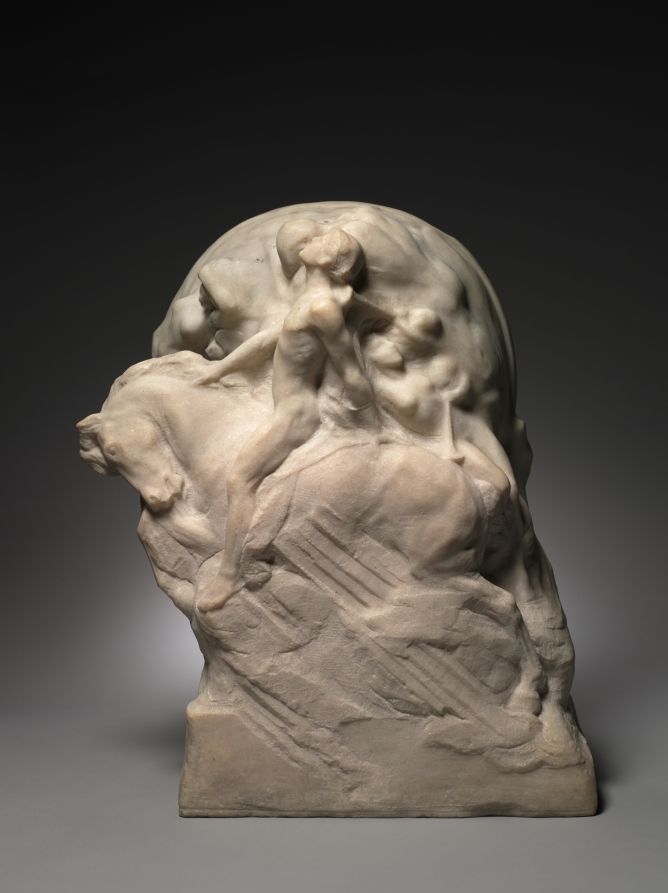
Formal Deconstruction: The Udumbara Paradox and the Hunt’s Kinetic Tension
The subject Dawn presents a unique challenge to the urban silhouette: how to encode the temporal paradox of the Udumbara flower—a bloom that is not a bloom, a signifier of a three-thousand-year interval—within the immediate, kinetic violence of The Hunt. The resulting aesthetic is not a compromise, but a dialectical synthesis. The form must be minimalist, not as an absence, but as a container for extreme tension. It is a silence that holds a scream.
The Udumbara’s visual strategy is one of negative space as presence. The flower, a tiny white umbel on decaying wood, is an exercise in micro-gesture. It does not demand attention; it requires contemplative focus. In the context of a 2026 executive wardrobe, this translates to a silhouette that is structurally severe yet visually quiet. The line must be uninterrupted, the fabric unadorned. The “bloom” is not a print or an embellishment, but a subtle shift in texture—a matte panel against a semi-lustrous ground, a micro-pleat that catches light only at a specific angle. This is the architectural equivalent of the Udumbara: a detail so refined it borders on the invisible, yet fundamentally alters the perception of the whole.
Conversely, The Hunt provides the dynamic counterpoint. Its visual core is diagonal force, muscular torsion, and the compression of time into a single, agonizing frame. The Rubenesque bodies are not static; they are vectors of energy. To translate this into a minimalist garment, one cannot simply add volume or chaos. Instead, the tension is internalized. The silhouette is sheath-like, but constructed with bias-cut panels that create a subtle, spiraling torque around the body. A jacket’s shoulder is sharp and defined (the hunter’s aim), while the sleeve is cut with a slight, forward pitch (the prey’s flight). The seam lines become the brushstrokes of the hunt—not decorative, but structural, dictating how the fabric falls and moves. The color, Ivory, is the critical mediator. It is the blank canvas of the temple plaque, the absence of blood. It forces the eye to read the pure form and the shadow it casts, rather than being distracted by chromatic drama.
Color as Mediator: Ivory’s Dual Register
Ivory is not a neutral. In this context, it is a high-stakes choice. It carries the purity of the Udumbara—the white of the flower, the unblemished surface of the wooden plaque. Yet it also evokes the bleached bone at the end of the hunt, the fossilized record of the struggle. It is the color of memory after violence. For the NYC executive, this color signals impenetrable composure. It is the uniform of the unflappable. In a city of black and navy, Ivory is a statement of controlled risk. It demands a flawless surface and a rigorous maintenance of form. Any wrinkle, any stain, becomes a narrative event. This is the executive’s burden: to wear a color that reveals every imperfection, thereby proving one’s mastery over the environment.
The textural palette must be equally dual. A double-faced wool in Ivory provides the matte, absorbent quality of the temple wood. A silk gazar in the same tone offers the crisp, reflective surface of a polished bone. The interplay between these two—a matte bodice with a gazar panel, a wool coat lined in silk—creates a visual friction that mirrors the Udumbara/Hunt dialectic. The light is the active agent. In the morning, the Dawn light, the garment appears soft, almost ethereal. By midday, under the harsh office fluorescents, the gazar panels flash, and the sharp seams become aggressive. The garment changes its nature with the light, a living document of the day’s passage.
Silhouette Architecture: The Sheath as a Site of Contradiction
The core silhouette for the 2026 executive wardrobe is the redefined sheath. It is not the soft, body-con of the past decade. It is armored in its minimalism. The shoulder line is the primary zone of tension. It is extended and squared, referencing the hunter’s broad stance, but the padding is razor-thin and sculpted, not bulky. It is a geometric assertion of presence, not a physical augmentation. The waist is defined but not cinched. A structural seam at the natural waist, perhaps with a concealed internal belt, creates a fulcrum between the upper and lower body. The skirt is pencil-straight, falling to the mid-calf—a length that is both modest and severe. A single, deep vent at the back is the only concession to movement, a controlled release of the kinetic energy contained within.
The jacket is a second skin. It is collarless, with a high, standing neckline that echoes the verticality of the temple plaque. The closure is asymmetrical, a single, hidden magnetic snap that creates a clean, diagonal line from the right shoulder to the left hip. This diagonal is the ghost of the hunting spear, the vector of the chase. The sleeves are set-in with a slight, forward rotation, creating a subtle tension across the upper back. When the executive reaches for a document, the fabric pulls taut, revealing the architecture of the body beneath. This is the moment of the hunt—the instant of action within a field of stillness.
Material Logic: The Fabric as a Field of Force
The primary fabric is a worsted wool woven in a high-density twill. Its weight is 280-300 gsm, providing drape and structure without bulk. The Ivory is achieved through a bleached, undyed process, giving it a slightly warm, bone-like undertone. The fabric’s surface is smooth but not shiny, with a micro-texture that is visible only upon close inspection. This is the Udumbara effect: a detail that rewards proximity and patience.
For the interior, a silk charmeuse in a matching Ivory is used. This creates a sensory shock when the garment is removed or turned. The cold, slippery silk against the matte, warm wool is a private experience of the dialectic. The lining is not merely functional; it is a secret, a hidden layer of the hunt’s sensuality beneath the temple’s austerity. The seams are flat-felled and top-stitched with a silk thread in a slightly lighter Ivory. This micro-contrast is the only decorative element. It is the trace of the brush, the line of the calligrapher that defines the flower’s edge.
Conclusion: The Executive as a Dialectical Figure
The 2026 Addison Fashion executive is not a passive wearer of clothes. They are a living argument. The Minimalist silhouette in Ivory is a philosophical position. It declares that stillness contains violence, that silence is a form of speech, and that control is the highest expression of power. The garment is a field of force, a dialectical space where the Udumbara’s eternal patience meets the Hunt’s immediate urgency. The executive who wears this is not choosing between the temple and the hunt. They are inhabiting both, holding the contradiction in perfect, unflappable balance. This is the Dawn of a new urban uniform: one that is as intellectually rigorous as it is visually commanding.