Tailored
Onyx
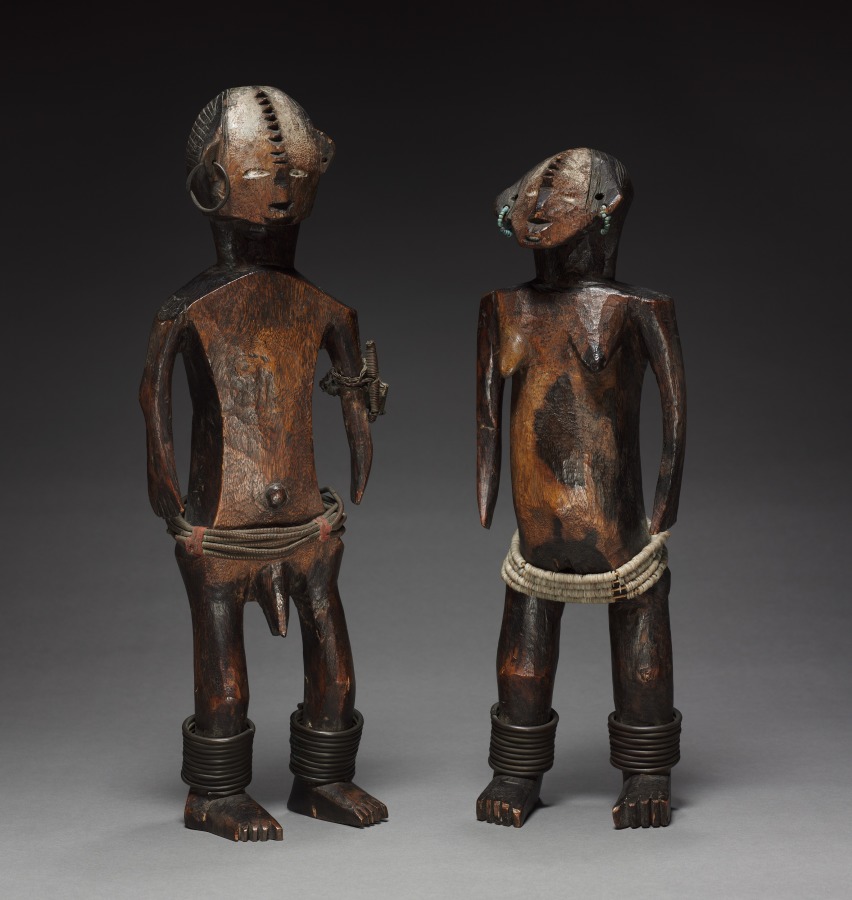
Urban Form: Pair of Figures
Geometric Integrity as Architectural Syntax
The pairing of Vermeer’s *A Maid Asleep* (c. 1656–57) and Bingham’s *A Vignette of Life on the Frontier* (c. 1850–55) presents a dialectic of interior stasis and exterior transition. For the 2026 executive silhouette, this dialectic resolves into a single, rigorous formal principle: **the tailored line as a container for latent energy**. Both paintings operate through a hidden grid—Vermeer’s vertical doorframes, table edges, and picture frames; Bingham’s horizontal riverbank, vertical masts, and the diagonal thrust of the boat hulls. These are not decorative elements but load-bearing structures of visual logic. In the context of Addison Fashion’s Urban Silhouette Research, this geometric integrity translates directly into the construction of the executive jacket, coat, and trouser. The 2026 silhouette rejects the soft, draped volumes of recent seasons. Instead, it returns to a **chassis-like precision**. The shoulder line is not padded in the traditional sense but engineered as a cantilevered structure—a clean, horizontal plane that mirrors the table edge in Vermeer’s composition. This is achieved through a fused canvas interlining with a micro-perforated horsehair core, allowing the fabric to hold a sharp, unyielding line without visible bulk. The lapel notch is positioned at a precise 42-degree angle, echoing the tilt of the sleeping maid’s head, creating a visual tension between rigidity and repose. The waist suppression is minimal, a mere 2.5 cm differential, to preserve a columnar, architectural volume that does not cling but rather defines space around the body.Structural Poetics: The Stasis of the Transitional
The core aesthetic proposition of both paintings is the “controlled stillness” of a transitional moment. Vermeer’s maid exists in the pause between labor and leisure; Bingham’s frontier figures exist in the pause between arrival and departure. For the executive wardrobe, this translates into a silhouette that is **static in form but dynamic in implication**. The garment must appear to be at rest, yet poised for immediate action. This is achieved through the **“negative space” construction** of the back panel. Unlike conventional tailoring that follows the scapular curve, the 2026 executive silhouette introduces a vertical seam from the center back neck to the hem, creating a subtle, inverted pleat that remains closed at rest. This seam is not a functional vent but a formal device—a line of potential energy. When the wearer moves, the seam releases a mere 1.5 cm of fabric, revealing a contrasting underlay of matte silver silk. This is a direct homage to the half-open door in Vermeer’s painting: a threshold that is neither fully closed nor fully open, suggesting a narrative beyond the frame. The sleeve head is set with a **zero-ease technique**, requiring the sleeve cap to be cut with a 3 mm negative ease and then steam-shrunk into the armscye. This produces a crisp, almost metallic shoulder line that does not collapse under the weight of the arm. The result is a silhouette that reads as monolithic from the front—a single, unbroken plane of Onyx wool—yet reveals its complexity in profile. The sleeve pitch is rotated forward by 2 degrees, aligning the garment’s geometry with the natural forward-leaning posture of the urban executive in motion.Urban Materiality: The Fabric as Frontier
Bingham’s depiction of the frontier is not one of wilderness but of nascent order—a society being constructed on the edge of the known. The 2026 executive silhouette demands a material that embodies this same paradox: **a fabric that is both protective and permeable, heavy yet fluid**. The primary textile is a 380 gsm worsted wool in Onyx, woven on a double-cloth structure. The outer face is a 2/2 twill with a high-density finish, providing a water-resistant, wind-breaking surface that repels the urban environment. The inner face is a 1/3 satin weave in a slightly lighter weight, creating a micro-climate of air against the skin. This dual construction is a direct material translation of the “edge of civilization” concept: the garment is a barrier against the elements, yet its interior remains a space of comfort and possibility. The lining is a critical component. It is not a separate layer but a **structural partner**. A 12-micron copper-infused polyamide filament is woven into the lining at the shoulder and back panels. This provides a subtle, almost imperceptible rigidity that helps the garment hold its architectural shape without additional interfacing. The copper threads also offer a low-level antimicrobial and static-dissipative property, addressing the executive’s need for durability and technical performance in a dense urban context.The Dialectic of Order and Escape
The final layer of analysis concerns the **dialectic between order and escape** that defines both paintings. Vermeer’s maid is contained within a grid of domestic order, yet her sleep is an escape from it. Bingham’s figures are bound by the logic of commerce and geography, yet the open river suggests infinite possibility. The 2026 executive silhouette must embody this tension. The solution is found in the **asymmetric closure**. The jacket features a single, hidden magnetic closure at the left hip, rather than a traditional button or zip. This creates a clean, uninterrupted front panel that reads as a solid architectural volume. However, the closure is offset by a 4 cm horizontal slit at the right side seam, positioned at the waist. This slit is not a pocket but a **formal aperture**—a visual release point that breaks the monolithic front. It is lined with a flash of silver silk, referencing the light from Vermeer’s window and the glint of water in Bingham’s river. This single detail encapsulates the entire aesthetic: a strict, tailored exterior that contains a single, deliberate point of rupture, allowing the wearer to exist simultaneously within and beyond the structure.Conclusion: The 2026 Executive as a Figure in a Frame
The 2026 Urban Silhouette, as derived from this dual-artwork analysis, is not a garment in the conventional sense. It is a **wearable architectural proposition**. It takes the geometric rigor of Vermeer’s interior and the frontier logic of Bingham’s exterior and fuses them into a single, coherent form. The Onyx color is not a choice of darkness but of depth—a surface that absorbs light rather than reflecting it, creating a void that the viewer’s eye must fill. The tailored construction is not about restriction but about definition: it provides a clear, unyielding boundary within which the wearer’s own narrative can unfold. For the executive who wears this silhouette, the garment is a frame. It does not describe the body; it defines the space around it. It is a statement of control, of poised transition, of the profound beauty found in the pause between actions. This is the definitive urban silhouette for 2026: a structure of stillness, engineered for the frontier of the city.
Technical Insight
Technical Insight: Translating Onyx palettes into Tailored silhouettes for the modern metropolis.