Urban Form: Study of Honoré de Balzac
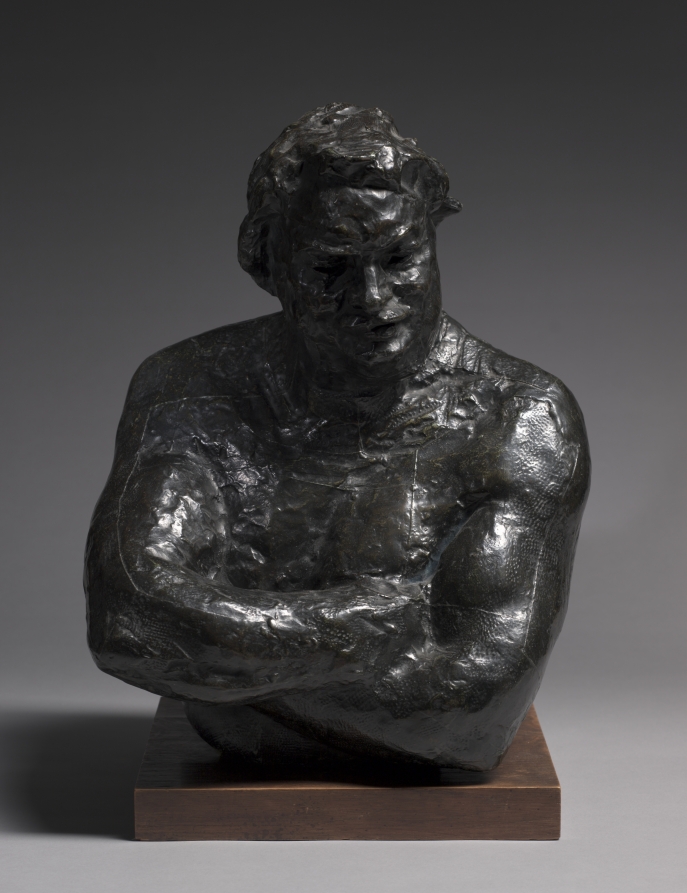
Executive Summary: The Balzacian Silhouette as a Study in Material Dialectics
This Urban Silhouette Research for Addison Fashion NYC deconstructs the formal and chromatic logic embedded within two canonical Tang Dynasty artifacts—the “Udumbara Flowers” Temple Plaque and the Square Wine Container (Fangyou)—as refracted through the literary lens of Honoré de Balzac. Balzac’s own oeuvre, a relentless catalog of social architecture and material desire, provides the intellectual framework to translate these ancient objects into a rigorous, contemporary wardrobe strategy for the 2026 executive. The analysis reveals a binary aesthetic system: “Fluid Immanence” (the plaque) versus “Structured Transcendence” (the vessel). These are not opposing forces but complementary poles of a single, sophisticated minimalism. The resulting collection is a study in restrained power, where garment form functions as a carrier of spatial and temporal narrative, and color—specifically Onyx—serves as the unifying, absorptive ground for this dialectic.
I. Material Ontology: The Logic of “Carving” vs. “Casting”
1.1 The Plaque’s Principle: “Form as Breath”
The Udumbara plaque achieves its aesthetic effect through a process of negative carving. The wood grain is not suppressed but liberated, its natural flow becoming the very syntax of the flower’s petals. This is a subtractive logic—the designer removes material to reveal an inherent, organic truth. In Balzacian terms, this mirrors the “physiognomy of character”—the belief that inner essence is legible through external form. For the 2026 wardrobe, this translates into garments that drape rather than construct. Think of a double-faced cashmere coat in Onyx, where the seam is not a rigid joint but a soft, flowing line that follows the body’s natural axis. The fabric’s weight and weave become the “wood grain,” and the cut is merely a respectful gesture toward that material’s inherent life. This is Minimalist not as absence, but as presence through reduction.
1.2 The Vessel’s Principle: “Form as Edict”
The Fangyou operates on an additive logic of casting. Bronze is forced into a mold, its surface then inscribed with the rigid geometries of taotie and leiwen patterns. This is a declarative architecture—the material is conquered to serve a pre-ordained, cosmic order. Balzac’s La Comédie Humaine is filled with such structures: the banking house, the aristocratic salon, the bureaucratic office. Each is a “vessel” containing and directing human behavior. For the executive wardrobe, this demands architectural tailoring. A single-breasted jacket in Onyx wool crepe, with a sharp, unbroken shoulder line and a precisely placed welt pocket, functions as a “vessel” for the wearer’s authority. The silhouette is not fluid but faceted, creating a series of planar surfaces that catch and direct light, much like the bronze vessel’s decorated panels. The Onyx hue here is not passive; it is the color of obsidian, of hardened, cooled lava—a visual declaration of permanence and control.
II. Spatial Rhetoric: The Interior Void vs. The Exterior Grid
2.1 The Plaque’s Space: The “Invisible Center”
The Udumbara flower floats without stem or root, creating a negative space that is not empty but charged with potential. This is a centripetal space—it pulls the viewer inward, toward a meditative, non-physical locus. Balzac’s protagonists often inhabit such spaces: the solitary writer’s garret, the financier’s private study. For the wardrobe, this informs the interior construction of a garment. A coat’s lining, for example, becomes a secret garden. We propose a reversible vest in Onyx silk charmeuse on one side, and a matte, textured Onyx wool on the other. The wearer experiences the “flower” of the silk against the skin—a private, unspoken luxury. The outer form remains severe, but the interior is an invitation to contemplation. This is the Minimalist gesture of the “hidden detail”: a single, perfectly placed interior pocket; a seam finished with a hand-stitched fell. The garment’s true architecture is revealed only to the initiated.
2.2 The Vessel’s Space: The “Cosmic Grid”
The Fangyou’s surface is a centrifugal space, projecting order outward. Each panel is a discrete, legible unit within a larger, rational system. The viewer’s eye is guided along a prescribed path: from the neck’s beast mask, down the belly’s thunder pattern, to the foot’s solid base. This is the logic of the corporate grid—the organizational chart, the quarterly report, the city block. For the 2026 executive, this translates into modular dressing. A skirt suit in Onyx wool gabardine, where the jacket’s lapel width, the skirt’s hemline, and the blouse’s collar are all calibrated to a single, invisible grid. The silhouette is not organic but systematic. The Onyx color here acts as a neutral field, allowing the proportions—the ratio of jacket length to skirt length, the distance between buttons—to become the primary visual language. This is Minimalist as pure information, stripped of ornament, communicating status through precision alone.
III. Chromatic and Temporal Synthesis: Onyx as the Color of Duration
3.1 The Plaque’s Time: The Instant as Eternity
The Udumbara flower, blooming once every three millennia, is a paradox of instantaneous eternity. The wood grain freezes this moment, but the grain itself speaks of slow, patient growth. In Balzac’s world, this is the “moment of crisis”—the instant when a character’s entire destiny pivots. For the wardrobe, this suggests garments that capture a singular, decisive gesture. A coat with a dramatic, asymmetrical closure—a single, large horn button at the collarbone—that forces the wearer to hold it in a specific, intentional way. The Onyx color, being the darkest possible black, absorbs all light and all time. It is the color of the void before creation, and the color of the final, silent note. It does not age; it endures.
3.2 The Vessel’s Time: The Accumulation of Patina
The Fangyou’s bronze patina is a record of duration. Each layer of oxidation is a chapter in a long history of handling, ritual, and observation. Balzac’s novels are themselves patinas—layers of social observation, character detail, and moral judgment built up over thousands of pages. For the wardrobe, this demands fabrics that age with dignity. A heavy Onyx linen suit, for instance, will develop a subtle sheen at the elbows and a soft crease at the knee. These are not flaws but marks of use, of a life lived in the garment. The Minimalist cut ensures that the fabric’s aging process is the only ornament. The Onyx color, when it begins to fade or catch light in a worn area, reveals a hidden depth—a slight blue or brown undertone—that mirrors the bronze’s green patina. This is a wardrobe that does not resist time but collaborates with it.
IV. Conclusion: The 2026 Executive as a Dialectical Being
The Addison Fashion NYC 2026 collection, informed by this Balzacian study, rejects the binary of “soft” versus “hard” tailoring. Instead, it proposes a dialectical wardrobe where the Fluid and the Structured coexist within a single, Minimalist framework. The Onyx palette is not a limitation but a concentration of meaning. The executive who wears these garments is not simply dressed; they are inscribed. Their silhouette speaks of both the inner breath of the Udumbara flower and the outer order of the Fangyou vessel. They are a walking comédie humaine, a living artifact of material and temporal intelligence. The garment is not a costume; it is a vessel for a life.