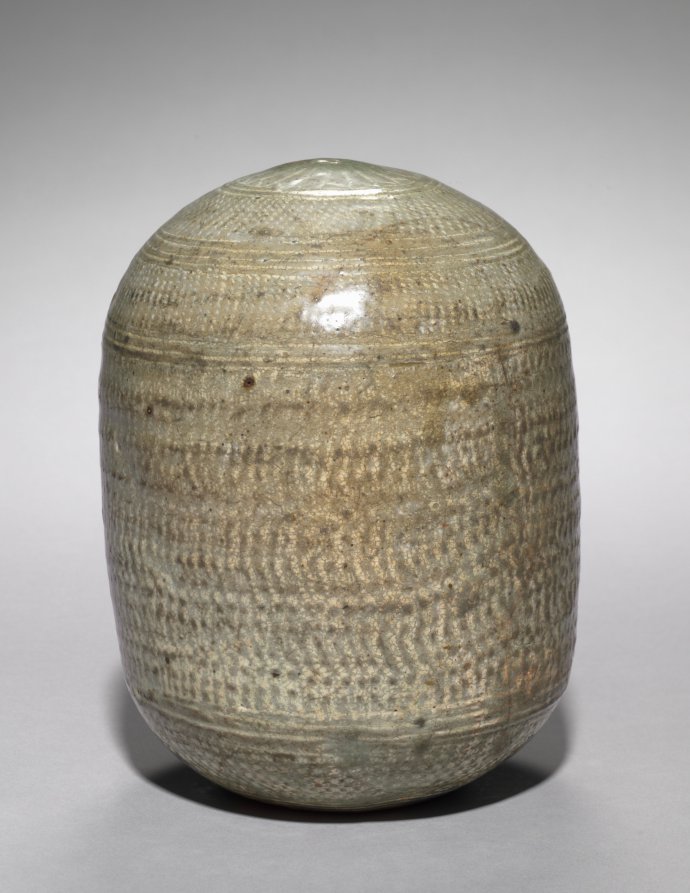
Urban Form: Wine Cask with Stamped Floral Decoration
Structural Poetics: The Architecture of Negative Space
The Wine Cask with Stamped Floral Decoration presents a masterclass in geometric restraint—a principle that defines the 2026 executive silhouette for Addison Fashion. The cask’s cylindrical volume, uncompromised by superfluous ornament, establishes a primary structural archetype: the body as a vessel of containment. Its stamped floral motif does not disrupt the surface; rather, it etches a rhythmic topography into the material, creating a dialogue between the object’s mass and the void it encloses. This is not decoration in the decorative sense—it is structural poetics, where every indentation and relief serves to articulate the container’s relationship to its interior emptiness.
The floral pattern, repeated with mathematical precision, generates a grid of organic geometry. Each petal is a calculated arc, each stem a linear incision. The stamping technique ensures uniformity without sacrificing tactility—the surface becomes a field of micro-shadows, catching light at oblique angles to reveal depth. For the executive silhouette, this translates into garment construction that prioritizes negative space. The 2026 collection will feature jackets and coats where seams are not merely functional but architectural lines that define volumes of air around the body. The cask’s cylindrical purity informs a sheath-like torso, where fabric is held taut at the shoulders and hips, then released into subtle flares or pleats that mimic the cask’s gentle curvature.
Urban Materiality: From Wood Grain to Textile Weave
The cask’s materiality—aged wood with a patina of use—offers a textural lexicon for urban fabrics. The stamped floral decoration is not painted or applied; it is impressed into the substrate, a process that respects the wood’s inherent grain while imposing a human-made order. This duality—natural irregularity versus industrial precision—is the cornerstone of urban materiality for the 2026 silhouette. We translate this through double-faced wools and bonded cottons that carry embossed patterns, where the motif is woven into the fabric’s structure rather than printed on its surface. The result is a monochromatic depth—a play of light and shadow that reads as texture rather than color.
The cask’s vertical staves and horizontal bands suggest a grid-based construction for garments. Trousers will feature pressed creases that echo the cask’s linear seams, while blazers incorporate welt pockets and ticket pockets as stamped elements—functional yet decorative, like the floral motif. The ivory palette is chosen to mirror the wood’s aged, desaturated tone—a neutral that absorbs urban grime and reflects the cold light of corporate interiors. This is not a warm ivory but a cool, architectural ivory, reminiscent of limestone, parchment, and bone china.
Geometric Integrity: The Vessel as Body
The cask’s geometry—a perfect cylinder with a slight waist—directly informs the executive silhouette’s core structure. The 2026 collection will feature fitted bodices that taper at the waist, then flare subtly at the hem, mimicking the cask’s barrel shape. This is not a return to the hourglass but a modernist reinterpretation of the vessel form. The shoulders remain structured but unpadded, allowing the fabric to drape from the collarbone like the cask’s metal bands. Sleeves are set-in with precision, creating a clean armhole that does not disrupt the torso’s cylindrical flow.
The stamped floral decoration, when analyzed geometrically, reveals a radial symmetry—each flower is a mandala of repeating arcs. This pattern is translated into laser-cut perforations on leather panels and embroidered eyelets on silk organza, creating breathable surfaces that maintain structural integrity. The negative space of the perforations becomes the design’s focal point, just as the cask’s emptiness defines its purpose. For the executive woman, this translates into garments that breathe with her movement, where the fabric’s perforations create a second skin that is both protective and permeable.
Silhouette Architecture: The 2026 Executive Uniform
The definitive silhouette for 2026 is the “Vessel Coat”—a long, fitted outer layer with a high neckline and concealed closure, its surface embossed with a subtle floral grid. The coat’s shoulder line is sharp, its sleeves set in a slight forward pitch to suggest motion even at rest. Below the waist, the coat flares into a gentle A-line, allowing for ease of stride while maintaining the cask’s vertical emphasis. The ivory wool is felted to a dense, almost wooden hand, and the embossed pattern is achieved through heat-pressing—a technique borrowed from the cask’s stamping process.
Underneath, the “Cup and Stand” blouse—a high-necked, sleeveless shell with a stand collar that mimics the porcelain cup’s rim. The blouse is cut from double-faced satin, its surface unadorned except for a single vertical seam at the center back, echoing the cask’s staves. The trousers are wide-legged but pleated at the waist, their volume referencing the cask’s capacity. The fabric is a wool-cashmere blend with a matte finish, its weight allowing it to fall in clean, architectural folds.
Conclusion: The Urban Vessel
The Wine Cask with Stamped Floral Decoration is not merely a decorative object—it is a structural manifesto. Its geometry teaches us that volume is defined by emptiness, that ornament can be structural, and that materiality is a language of light and shadow. For the 2026 executive silhouette, this translates into garments that are vessels for the body—containers that do not constrict but define space. The ivory palette ensures that the silhouette reads as a monolithic form in the urban landscape, while the stamped floral motifs add a layer of tactile intelligence that rewards close inspection. This is fashion as architecture for the body—cold, precise, and profoundly minimal.