Minimalist
Slate
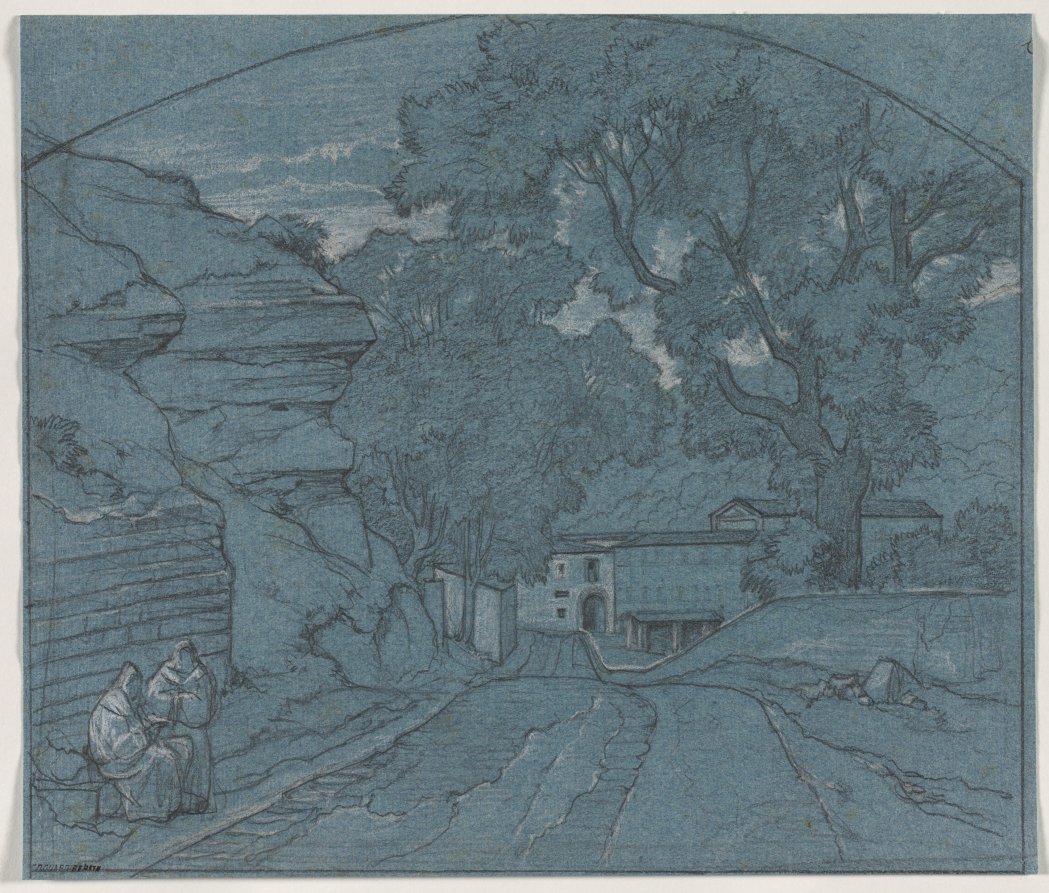
Urban Form: Landscape with Two Monks
Technical Deconstruction of Form: The Dialectic of Stasis and Dynamism
The subject matter—a fragmented mold of musicians and a mortuary zodiac ox—presents a compelling binary that directly informs the 2026 NYC executive wardrobe. The analysis must begin with the fundamental tension between kinetic energy and geometric stasis. The Mold Fragment with Musicians is a study in compressed motion. The figures are not anatomically precise; rather, their value lies in the relational vectors between bodies and instruments. The flutist’s tilt, the drummer’s raised arm, the lute player’s curved spine—these are not static poses but frozen trajectories. The materiality of the clay, with its visible finger impressions, retains the “wetness” of creation, suggesting that the sound is still trapped within the porous surface. This is a tactile archive of ephemerality. Conversely, the Mortuary Figure of the Ox (Taurus) is a masterclass in negative dynamism. The form is deliberately de-animated. The horns curve in a perfect, unbroken arc. The body is a solid, ovoid mass—a terrestrial mound. There is no muscle definition, no suggestion of breath. This is not an animal; it is a celestial coordinate. The artist has stripped away all biological contingency to achieve a pure, geometric signifier of the zodiac. The symmetry is absolute, creating a visual anchor that resists the entropy of the tomb. It is a gravitational center in a space of dissolution.Application to the 2026 Silhouette: The Minimalist Executive
For the Addison Fashion 2026 executive wardrobe, we extract two core principles: compressed energy from the musicians and geometric finality from the ox. The silhouette must not be merely “simple”; it must be a dialectical resolution of these opposing forces. The result is a Minimalist form that is anything but passive. 1. The Shoulder Line: The Ox’s Horizon The ox’s body provides the blueprint for the shoulder. We reject the aggressive, padded power shoulder of the 1980s. Instead, we adopt a clean, horizontal line that sits slightly extended but without volume. The shoulder pad is not a muscle; it is a datum line. It creates a stable, architectural platform for the upper body, echoing the ox’s function as a “guardian of the four directions.” In a double-breasted jacket or a structured coat, this shoulder communicates immovable authority—the executive who does not need to assert power through bulk, but through presence. The fabric (a heavy wool or a structured cotton) must hold this line without sagging, mimicking the ox’s unyielding mass. 2. The Torso: The Musician’s Compression The torso is where the musician’s energy is encoded. The fit is deliberately compressed—not tight, but sculpted. The waist suppression is precise, creating a subtle “V” that suggests a body in a state of readiness. This is not the relaxed drape of a bohemian; it is the contained tension of a musician about to strike a chord. The jacket’s closure is high, often a single button or a hidden placket, to maintain a clean, unbroken line from shoulder to hip. This compression creates a vertical vector that elongates the figure, while the internal structure (canvas, chest piece) provides the “clay” that holds the form. The executive’s body becomes the instrument; the jacket is the mold. 3. The Pant: The Zodiacal Column The pant is a direct translation of the ox’s geometry. It is a straight, columnar silhouette from hip to hem. No taper, no flare. The width is calibrated to the ox’s ovoid mass—neither narrow nor wide, but exactly proportional to the torso’s compression. This creates a visual stability that grounds the entire look. The hem sits just above the shoe, creating a clean break. The fabric (a worsted wool or a dense gabardine) has a slight weight that allows the pant to fall without clinging. This is the mortuary stillness applied to the lower body—a foundation that does not move, allowing the upper body’s compressed energy to be the focal point.Color Analysis: Slate as the Chromatic Mediator
The color palette is not arbitrary; it is derived from the materiality and symbolism of the two artifacts. The Slate selection is a direct response to the binary of clay and stone. 1. The Clay of the Musicians: Warmth in the Gray The mold fragment is not a pure gray. It is a terracotta-infused gray—the color of fired earth that has absorbed the heat of the kiln and the moisture of the musician’s hands. Slate, in its purest form, is a cool, blue-gray. However, for the 2026 collection, we introduce a warm-toned slate that carries a subtle undertone of ochre or umber. This is the “memory of the clay.” It prevents the color from becoming sterile or corporate. It is the chromatic equivalent of the musician’s breath—a warmth that exists within a structure of coolness. 2. The Stone of the Ox: The Absolute Gray The mortuary figure, carved from stone, presents a cool, neutral gray that is devoid of biological warmth. This is the absolute slate—the color of celestial order, of the zodiac’s fixed points. In the wardrobe, this manifests as the primary fabric color for the jacket and pant. It is the “stone” that anchors the executive. The color is not black, which can be aggressive or funereal. It is not silver, which can be metallic and cold. Slate is authoritative without being hostile. It is the color of the sky before a storm, of the bedrock beneath the city. 3. The Dialectical Resolution: Layering the Warm and Cool The executive wardrobe must not be a monolith. The tension between the two slates is resolved through texture and layering. The outer shell (jacket, coat) is the cool, absolute slate—the ox’s stone. The inner layer (shirt, knit, or blouse) is the warm, clay-infused slate—the musician’s earth. This creates a chromatic dialogue that is visible only in certain light or at close proximity. It is a subtlety that rewards the discerning eye. The effect is one of controlled depth: the executive appears composed on the surface, but the warmth of the inner layer suggests a capacity for improvisation and human connection.Conclusion: The 2026 Executive as a Living Artifact
The 2026 Addison Fashion executive is not a consumer of trends; she is a curator of form. The Minimalist silhouette, derived from the binary of the musicians and the ox, is a functional dialectic. The compressed torso holds the energy of the living; the columnar pant provides the stillness of the dead. The Slate color palette mediates between the warmth of the clay and the coldness of the stone. The result is a wardrobe that is not merely worn, but inhabited. It is a second skin that allows the executive to navigate the urban landscape with the precision of a zodiac sign and the vitality of a musician’s rhythm. The garment becomes a time capsule—a material container for the anxiety of the present, transformed into a tool for enduring presence.
Technical Insight
NYC Perspective: Translating Slate tones into Minimalist silhouettes.