Minimalist
Onyx
Urban Form: Sculptural Element from a Reliquary Ensemble (mbulu ngulu)
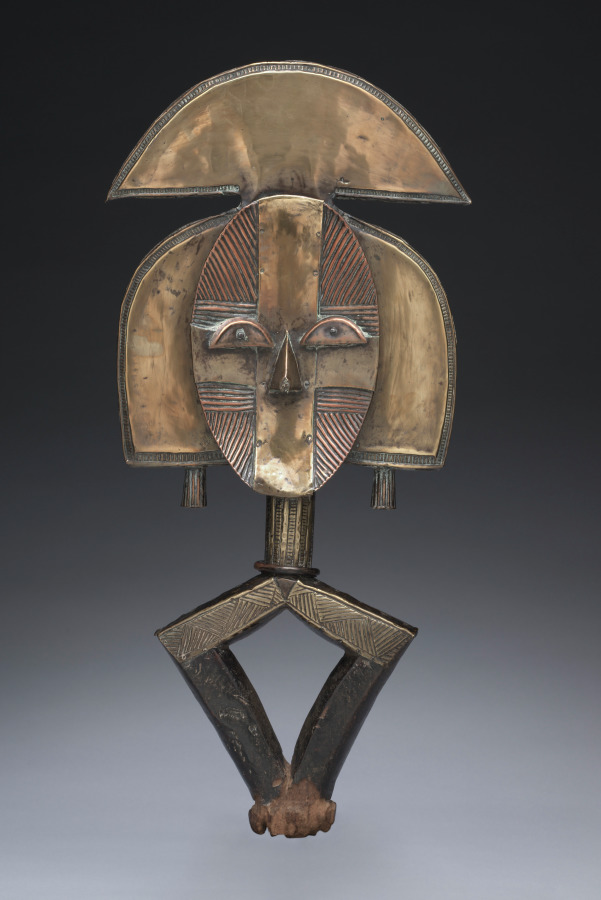
I. Preliminary Deconstruction: The Reliquary as Architectural Precedent
The *mbulu ngulu*—a sculptural element from a Fang reliquary ensemble—is not an ornament. It is a load-bearing aesthetic proposition. Its concave frontal plane, compressed into a near-cylindrical volume, operates as a study in negative space and gravitational restraint. For Addison Fashion’s 2026 executive silhouette, this object offers a radical departure from expressive tailoring. We extract its core principle: **mass rendered as stillness**. The reliquary’s polished, dark patina—here translated to Onyx—does not reflect light so much as absorb it, creating a visual void that commands attention through absence. This is the foundational logic for our forthcoming Urban Silhouette Research.II. Geometric Integrity: From Sacred Vessel to Shoulder Architecture
A. The Concave Plane and the Reversed Lapel
The reliquary’s most arresting feature is its recessed central panel, flanked by two raised lateral ridges. This is not a flat surface; it is a topography of compression. In our 2026 executive blazer, this translates to a **reversed lapel construction**—not the traditional notch or peak, but a concave fold that draws the eye inward toward the sternum. The lapel’s edge is cut with a deliberate, almost brutal straightness, mimicking the reliquary’s carved boundary between the sacred face and the utilitarian backing. The shoulder seam is set slightly forward, creating a subtle anterior slope that echoes the figure’s bowed, contemplative posture. The result is a silhouette that does not expand outward in power, but contracts inward in authority—a quiet, immovable presence.B. The Cylindrical Torso and the Suppressed Waist
The reliquary’s body is a cylinder, unbroken by anatomical detail. Its power lies in its refusal to articulate the human form beneath. For the executive coat, we adopt a **suppressed waist with zero drape**. The garment is cut with a single, continuous side panel that runs from the underarm to the hem, with no horizontal seam. This creates a tubular volume that skims the body without clinging. The waist is not cinched; it is implied through a subtle inward curvature of the panel’s edge, visible only in profile. This is not tailoring for movement—it is tailoring for *monumentality*. The wearer becomes a stationary axis within the urban flux, a point of reference against the city’s chaos.C. The Hem as a Plinth
The reliquary’s base is flat, unadorned, and weighted. It does not taper; it terminates. Our coat’s hem is cut at a precise, horizontal line, falling just below the knee for the long executive version, or at the high hip for the cropped iteration. The hem is finished with a **hidden internal weighting**—a thin, flexible metal chain sewn into the lining. This ensures the garment falls with a deliberate, heavy stillness, resisting the random movement of wind or stride. The hem functions as a plinth, grounding the entire composition in a state of gravitational certainty.III. Structural Poetics: The Language of Seams and Shadows
A. The Invisible Seam
Drawing from the reliquary’s seamless front, we employ a **fused construction technique** for all primary seams. No stitching is visible on the exterior. The panels are bonded using a high-temperature adhesive interlining, creating a single, monolithic surface. This eliminates the visual noise of thread and needle, allowing the pure geometry of the cut to dominate. The only visible stitch is a single, vertical line running down the center back—a deliberate reference to the reliquary’s spine-like ridge, a subtle acknowledgment of the human within the monument.B. Shadow as a Design Element
The reliquary’s recessed panel creates a permanent shadow, a dark void that defines its form. We replicate this through **strategic underlayering**. The coat’s interior is lined with a matte, charcoal-toned viscose, which is visible only at the lapel’s concave fold and the cuff’s interior. When the wearer moves, this dark interior flashes briefly—a fleeting glimpse of the void. This is not accidental; it is a calculated disruption of the garment’s stillness, a reminder that the object is inhabited. The shadow becomes a poetic device, articulating the tension between permanence and animation.IV. Urban Materiality: Onyx as a Functional Choice
A. The Fabric: A Technical Wool-Silk Blend
The Onyx colorway is not a simple black. It is a deep, mineral-infused shade achieved through a **double-dye process** on a 380-gram wool-silk blend. The wool provides structural memory, ensuring the concave lapel holds its shape without puckering. The silk adds a subtle, non-reflective sheen that catches light only at the fabric’s peaks, mimicking the reliquary’s polished but not glossy surface. The fabric is treated with a **nano-hydrophobic finish**, making it resistant to urban moisture and particulate matter. This is not a garment for the boardroom; it is a garment for the concrete canyon, the rain-slicked plaza, the glass-and-steel transit hub.B. Hardware as Reliquary Metal
All buttons and fasteners are cast in **oxidized gunmetal**, with a brushed, matte texture. They are not polished; they are burnished, as if aged by centuries of handling. The buttons are set into the fabric with a hidden shank, so they sit flush against the surface, furthering the monolithic aesthetic. The zipper, if used in the pant iteration, is a **concealed, two-way system** with a magnetic closure, eliminating any visible pull or tape. The hardware is not decorative; it is functional sculpture, echoing the reliquary’s metal attachments that once secured its wooden base.V. The 2026 Executive Silhouette: A Definitive Statement
The Addison Fashion 2026 executive silhouette, derived from the *mbulu ngulu*, is a study in **controlled mass and architectural silence**. It rejects the fluid, expressive tailoring of previous seasons in favor of a rigid, almost ceremonial form. The wearer is not adorned; they are *housed*. The garment does not move with the body; it moves *around* it, creating a personal space of authority that is impervious to external distraction. This is a silhouette for the executive who understands that true power is not loud, but still. It is for the individual who commands the room not through gesture, but through presence. The Onyx colorway, the concave lapel, the weighted hem, the invisible seams—all converge into a single, unyielding statement: **I am here, and I do not yield.** The reliquary was built to contain the sacred and protect it from decay. Our garment is built to contain the self and protect it from the erosion of urban life. It is a modern armor, not for battle, but for the relentless negotiation of the city’s verticality. This is the definitive urban silhouette—a monument to the individual, cut from the geometry of the eternal.
Technical Insight
Technical Insight: Translating Onyx palettes into Minimalist silhouettes for the modern metropolis.