Urban Form: Tightrope Walker
I. The Dialectical Frame: From Sacrificial Vessel to Silent Object
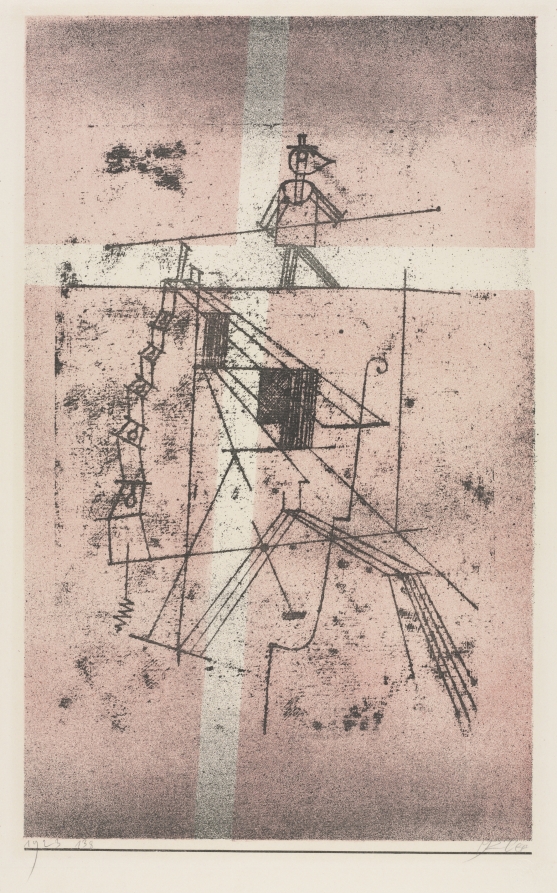
The Tightrope Walker subject, when filtered through Addison Fashion’s internal DNA, demands a reconciliation of two opposing aesthetic regimes: Jacques-Louis David’s neoclassical martyrdom and Giorgio Morandi’s phenomenological stillness. The former elevates the object—the hemlock cup—into a transcendental signifier, a vessel of philosophical conviction that burns with narrative intensity. The latter strips the ceramic form of all referential weight, leaving only the mute fact of its presence. For the 2026 executive silhouette, this dialectic is not an art-historical footnote but a structural imperative. The garment must simultaneously perform the heroic gesture—a sharp, declarative line that commands space—and the quiet withdrawal—a fabric that falls without insistence, that does not beg for meaning. The Tightrope Walker exists in the tension between these poles: a body poised over the abyss, yet utterly composed. The silhouette must therefore be a study in controlled suspension, where every seam is a taut wire and every drape a calculated fall.
II. Geometric Integrity: The Architecture of Balance
David’s composition relies on a rigorous triangular schema—Socrates’ outstretched arm, the bed’s horizontal, the column’s vertical—to anchor the drama. Morandi’s canvases, by contrast, deploy a near-imperceptible asymmetry: the slight tilt of a jar, the uneven spacing between forms, the subtle compression of the picture plane. The Tightrope Walker’s garment must synthesize these geometries into a wearable system. The shoulder line, for instance, cannot be a mere padding of the clavicle; it must be a structural fulcrum, echoing the classical pediment while avoiding its heaviness. A sharp, extended shoulder—cut with a 0.5-centimeter forward pitch—creates the visual equivalent of Socrates’ index finger pointing toward the heavens: a directional vector that organizes the entire torso. Yet the fabric beneath must not cling or perform. It should hang in a clean, vertical column, referencing Morandi’s stacked vessels, where each element holds its own weight without touching the next. The result is a silhouette that reads as architectural but not monumental—a skyscraper in a fog, not a cathedral on a hill.
The waist, or rather its deliberate absence, becomes the next critical coordinate. David’s figures are draped in classical robes that cinch at the natural waist, emphasizing the body’s heroic proportions. Morandi’s jars have no waist—they are cylinders of varying girth, their interest lying in the ratio of height to width. For the executive Tightrope Walker, the waist should be de-emphasized, almost erased, via a continuous line from shoulder to hem. This is achieved through a princess-seam construction that follows the ribcage without nipping in, allowing the fabric to fall as a single, unbroken plane. The effect is not shapelessness but negative space made positive: the body becomes the internal armature, the garment the external shell. The hemline, meanwhile, must terminate with precision—either at the mid-calf for a fluid, elongated proportion, or at the ankle for a more severe, columnar stance. No asymmetry, no handkerchief hems, no decorative slits. The edge is a decision, not a suggestion.
III. Structural Poetics: Seams as Philosophical Lines
In David’s painting, light carves the forms; in Morandi’s, light erodes them. The Tightrope Walker’s garment must negotiate this through seam placement and fabric memory. Consider a double-faced wool crepe in onyx—a material that absorbs light rather than reflecting it, echoing Morandi’s matte surfaces. The seams should be pressed open, not flat, creating a micro-ridge that catches the faintest ambient glow, mimicking the subtle tonal shifts in a Morandi still life. These seams are not functional afterthoughts; they are philosophical lines, tracing the path between the garment’s intention and its execution. A center-back seam, for instance, can be curved by 1.2 centimeters at the thoracic vertebrae, producing a barely perceptible sway that suggests the tightrope walker’s equilibrium—a body perpetually correcting itself. The sleeve, set with a 3-centimeter drop shoulder, creates a diagonal from neck to wrist that recalls Socrates’ arm, but rendered in a softer, more ambiguous angle. The cuff, cut long and narrow, extends the line of the hand, turning the gesture of reaching into a statement of restraint.
The interior construction is equally critical. No visible lining, no exposed zippers, no hardware. The garment must be self-supporting, like Morandi’s jars standing alone on a table. This requires a fused interlining that extends from the shoulder to the hip, providing structure without stiffness. The collar—if present—should be a low, rolled band, neither a lapel nor a shawl, but a neutral transition between neck and torso, much like the rim of a vessel. Pockets are omitted or concealed within the side seams, preserving the purity of the outer shell. The entire piece is a study in subtraction: every element that does not serve the vertical line is eliminated. This is not minimalism as poverty but minimalism as ontological clarity—the garment as a statement of what remains after all non-essentials are stripped away.
IV. Urban Materiality: The Fabric as Urban Terrain
The city is a landscape of hard edges and soft shadows, of glass towers and asphalt voids. The Tightrope Walker’s fabric must embody this duality. For the primary shell, a virgin wool with a 12-micron fiber offers a dense, dry hand that holds a crease with surgical precision, yet drapes with a liquid fall when left unseamed. The onyx hue—a black so deep it reads as a void—references both David’s chiaroscuro and Morandi’s tonal gradations. Against this, a secondary material in matte silk twill can be used for the undercollar and sleeve lining, providing a whisper of friction against the skin, a reminder of the body’s presence without overt sensuality. The weight should be substantial—380 grams per square meter—so that the garment moves with the wearer, not against them. It should feel like a second skin of compressed urban air: heavy enough to anchor, light enough to ascend.
Surface treatment is minimal. A single pass of steam, no pressing on the face, to preserve the fabric’s natural grain. The result is a texture that is neither smooth nor rough but somewhere between polished stone and raw concrete. This is the materiality of the tightrope itself—a thin, taut line over an abyss, both fragile and unyielding. The garment does not shout; it hums at a frequency just below perception, like the vibration of a wire under tension. It is the uniform of one who walks between worlds—the classical and the modern, the heroic and the still—without falling into either.
V. Conclusion: The Silhouette as a Held Breath
The 2026 executive silhouette, distilled from the Tightrope Walker subject, is not a garment but a spatial proposition. It asks the wearer to inhabit a line between David’s certainty and Morandi’s doubt, between the cup’s poison and the jar’s emptiness. The onyx column, cut with geometric rigor and draped with phenomenological restraint, becomes a wearable meditation on the nature of objects and the objects we become. It is a silhouette that does not perform power but embodies poise—the quiet, unshakeable balance of one who has accepted the void beneath their feet and chosen to walk it anyway. In this, Addison Fashion offers not a trend but a thesis: that the most radical statement in an age of noise is a garment that simply, perfectly, holds its line.