Urban Form: Carving from an Overmantel
I. The Overmantel as a Structural Premise
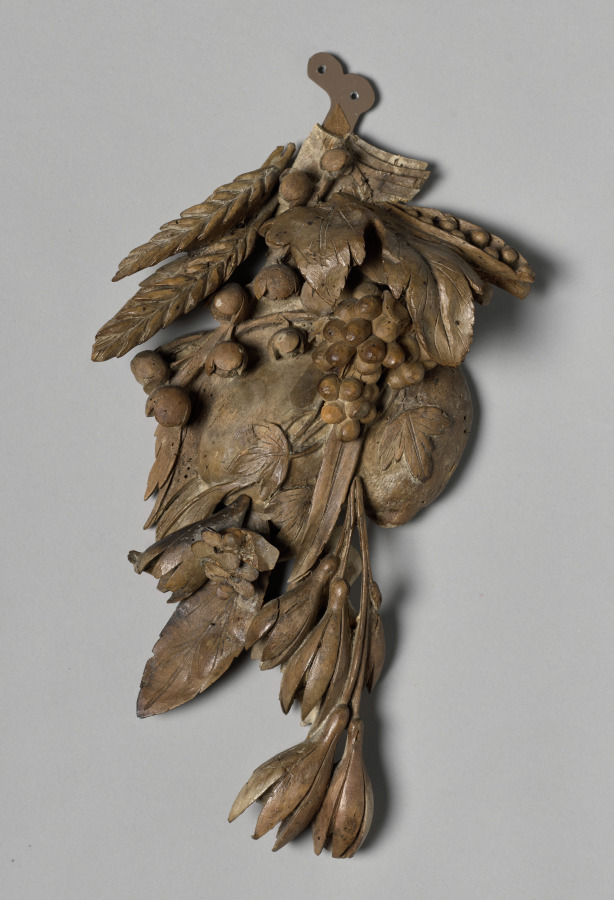
The subject—Carving from an Overmantel—is not a garment. It is a provocation. In its original context, the overmantel occupies the liminal zone between architecture and ornament, a horizontal band that arrests the vertical thrust of a room. For Addison Fashion’s 2026 executive silhouette, this artwork is translated into a tailored carapace: a jacket or overcoat whose structural logic borrows from the overmantel’s compression of space—its insistence on framing, on halting the eye, on creating a deliberate pause within a larger architectural rhythm.
The geometric integrity here is not found in symmetry but in weighted horizontality. The overmantel’s carved relief—whether in wood, stone, or lacquer—demands a reading of layered planes. Our silhouette responds with a sharpened shoulder line that extends slightly beyond the natural acromion, not for drama but for territorial definition. The lapel is cut with a reduced gorge, pulling the eye inward, while the waist suppression is minimal—almost imperceptible—allowing the torso to read as a single, unbroken volume. This is not a silhouette that flatters; it is one that commands.
II. The Lacquer Logic: Layered Depth as Material Narrative
The internal DNA references a Ming dynasty carved lacquer box—specifically, the “携琴访友” (carrying a qin to visit a friend) motif. The lacquer’s construction is one of accumulation: hundreds of layers of cinnabar, each applied, dried, and then carved into. This is not surface decoration; it is substance carved from depth. For the 2026 executive silhouette, this translates into a fabric philosophy of compressed density.
We employ a double-faced wool-cashmere blend, 680 grams per meter, with a tightly woven twill structure that mimics the lacquer’s stratified build. The cloth is not printed; it is constructed. The color—Onyx—is not a flat black but a near-black achieved through a blend of deep charcoal, iron oxide, and a whisper of indigo, so that under urban sodium lighting, the surface reveals a faint, internal glow, akin to the lacquer’s patina catching lamplight. The tailoring technique mirrors the carving: we do not drape; we sculpt. Each panel is cut with a 0.5 cm negative ease at the shoulder, then pressed with a steam iron to create a subtle, permanent ridge along the armhole—a “carved” line that reads as architectural shadow.
III. Caravaggio’s Chiaroscuro: The Cut as Light Management
The second reference—Caravaggio’s The Musicians—introduces a counterpoint. Where the lacquer box is tactile, internal, and processual, Caravaggio’s oil is optical, external, and instantaneous. His chiaroscuro does not illuminate; it isolates. The figures emerge from darkness, their faces and instruments caught in a theatrical shaft of light. For our silhouette, this becomes a study in negative space and contrast.
The tailored jacket is cut with a high, closed throat—a stand collar that rises to the mandible, effectively “darkening” the neckline. The front closure is concealed beneath a placket, so that when the garment is worn, the torso reads as a single, unbroken field of Onyx. The only interruption is a single, horizontal seam at the chest, placed at the level of the fourth rib, which catches light and casts a shadow across the sternum. This seam is not functional; it is purely compositional, echoing the overmantel’s horizontal band and Caravaggio’s diagonal light. The effect is a garment that manages light—it does not reflect so much as it directs the viewer’s gaze, forcing a slow, deliberate reading of the body’s architecture.
IV. Urban Materiality: The City as Atelier
The 2026 executive operates within a specific material reality: glass, steel, concrete, and the invisible frequencies of data. Our fabric choice must respond to this. The wool-cashmere blend is treated with a nano-hydrophobic finish, not for rain resistance but for acoustic deadening—the fabric absorbs ambient noise, creating a pocket of silence around the wearer. The lining is a silk-charmeuse in a matte finish, printed with a micro-architectural grid—a nod to the overmantel’s carved landscape, but rendered as an abstract city map. This is a hidden detail, visible only when the garment is removed, a private acknowledgment of the wearer’s own navigation through urban space.
The hardware is minimal: corozo buttons, dyed to match the Onyx, with a matte, bone-like texture that recalls the lacquer box’s carved relief. The buttonholes are hand-stitched in a silk thread with a cross-stitch technique that creates a subtle, raised edge—again, a “carved” quality. The shoulder pad is not foam but a molded horsehair canvas, shaped under heat to create a permanent, curved profile that mimics the overmantel’s architectural cornice. This is not a soft shoulder; it is a structural shoulder, one that holds its shape even after hours of wear, resisting the body’s tendency to slump.
V. The Silhouette’s Temporal Logic
This is not a garment for the present moment; it is a garment for duration. The lacquer box was made to be handled over decades, its surface slowly polished by touch. Caravaggio’s painting was made to be viewed in candlelit chapels, its drama unfolding only in low light. Our silhouette operates on a similar temporal axis: it is slow fashion in the most literal sense—a garment that reveals its geometry only after repeated wear, when the fabric has molded to the wearer’s frame, and the seams have developed a subtle, personal patina.
The 2026 executive does not change with trends; she accumulates. Her wardrobe is a series of carved objects, each one a response to a specific architectural or artistic provocation. The overmantel, with its horizontal insistence, becomes her jacket. The lacquer’s depth becomes her fabric. Caravaggio’s light becomes her cut. Together, they form a silhouette that is neither nostalgic nor futuristic, but timeless in its structural logic—a tailored carapace for a woman who understands that true power is not expressed through volume or ornament, but through precision, restraint, and the quiet authority of a line that cannot be broken.
VI. Conclusion: The Silhouette as a Carved Interval
In the end, the overmantel is not a source of decoration but a structural interval—a pause between wall and ceiling, between one room and the next. Our 2026 executive silhouette is precisely that: a pause between the wearer’s body and the urban environment, a carved interval that defines space without occupying it. It is tailored, but not restrictive; dark, but not somber; architectural, but not cold. It is, in the truest sense, a carving from an overmantel—a fragment of a larger structure, isolated, refined, and worn as a second skin of onyx and shadow.