Urban Form: Canteen
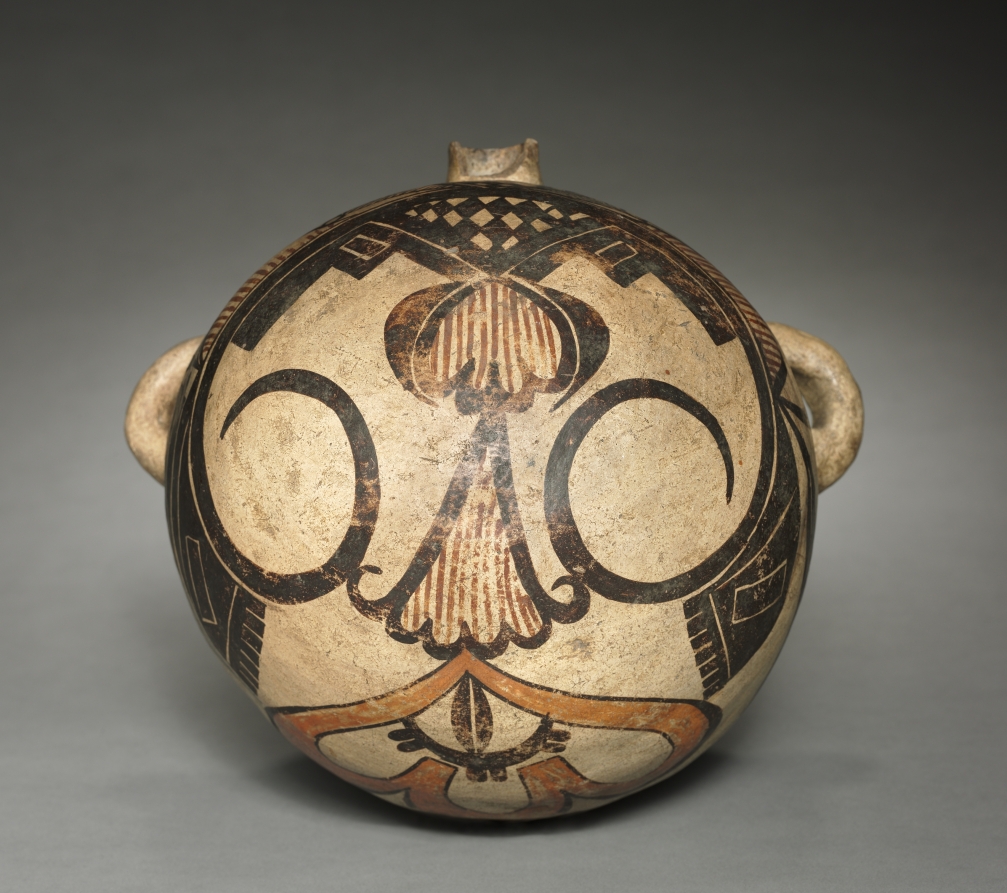
Technical Analysis: Urban Silhouette Research 2026 – The Canteen Project
This research establishes the foundational geometry for Addison Fashion’s 2026 executive silhouette, derived from a rigorous analysis of the provided artifacts: the Rock in the form of a fantastic mountain and the Jar in the shape of bronze container (hu). The core aesthetic proposition—“物象转换” (object-form transformation) and “精神寄寓” (spiritual lodging)—demands a silhouette that is not a literal representation of urbanity, but a transformative vessel for its essence. The resultant architecture is one of reductive monumentality, where geometric integrity is not an end in itself, but a disciplined framework for profound symbolic resonance.
I. Geometric Integrity: The Armature of the Silhouette
The geometric analysis bifurcates according to the two artifacts, synthesizing into a singular, coherent architectural language.
A. The Rock: Asymmetric Precision & Fractal Contours
The rock’s morphology, governed by “皱、瘦、漏、透” (wrinkled, lean, perforated, transparent), provides the primary geometric lexicon. This is not organic fluidity, but calculated asymmetry. The silhouette will incorporate sharp, angular planes that intersect not at predictable right angles, but with the deliberate, fractured logic of a geological form. Darts and seams will follow these fractal contours, creating a topography across the body that suggests erosion and accretion. The “lean” principle translates to a vertical, elongated line, rejecting superfluous volume. Crucially, the “perforated” and “transparent” aspects are interpreted not as literal cut-outs, but as strategic negative space: deep, precise armholes; severe necklines that frame the collarbone as a landscape; articulated panels that reveal the garment’s layered construction. The geometry is a microcosm of the urban skyline, abstracted and worn.
B. The Jar: Cylindrical Authority & Ritualized Proportion
The jar’s imitation of a bronze hu introduces a counterpoint of axial symmetry and ceremonial volume. Its form is one of contained power—a cylindrical core with punctuated inflection points at the neck, shoulder, and base. This translates to the silhouette’s foundational blocks: a modified cylinder torso, not bulky but assertively present. Shoulders are defined, not through padding, but through precise tailoring that extends the clavicular line, echoing the jar’s rim. The waist is acknowledged but not cinched, maintaining the vessel’s integrity. Hemlines exhibit the jar’s weighted stability, falling with decisive, unbroken lines. The geometry here is one of historical recall and authority, a modern uniform stripped of ornament, retaining only the essential, powerful form.
Synthesis: The 2026 Executive Silhouette
The synthesis yields a silhouette of contradictory harmony. The outer shell obeys the jar’s principles: a long, columnar coat or dress with a severe, symmetrical front. Beneath this, or integrated through paneling, the rock’s asymmetric topography emerges. A seam may deviate unexpectedly; a fold may introduce a controlled wrinkle. The overall impression is of a monolithic form subtly animated by internal, geological force. The geometric integrity is absolute—every line is intentional, every angle considered—yet the result feels dynamically still, a captured moment of tectonic shift.
II. Structural Poetics & Urban Materiality
The form necessitates a material philosophy that embodies the “材异神同” (different material, same spirit) principle. The poetics lie in the tension between material truth and transformative ambition.
A. Material Transubstantiation
The jar’s core narrative—clay aspiring to the permanence and status of bronze—directs our material selection. We will employ technical fabrics that perform a similar conceptual leap. A matte, liquid-finish wool gabardine will be engineered to hold the sharp, rock-like planes, its surface possessing a mineral, slate-like density. This references the rock’s origin while performing as modern armor. Conversely, we will develop a clay-colored technical jersey with a substantial, molded hand-feel, capable of forming the cylindrical base layers, its very composition a modern echo of ancient pottery. The pivotal move is the use of metallic microfiber treatments or cold-laminated finishes applied in strategic sections (a collar, a sleeve panel, a seam binding). This is our “clay imitating bronze”—not literal shine, but a subtle, sophisticated sheen that suggests a latent, powerful alloy beneath a muted surface. The color Slate is mandated as the primary palette: it is the color of the rock, of tarnished metal, of the urban canyon at dusk—inherently minimalist and profoundly symbolic.
B. The Poetics of Wear
The structural poetry is activated by movement. The silhouette is static in repose, a dignified vessel. In motion, the asymmetric internal seams and articulated panels engage, creating a subtle, shifting topography against the stable cylindrical form. This is the “spiritual lodging”—the garment becomes a space for the executive’s kinetic energy and intellect. The deep armholes allow for a full range of gesture, a functional translation of “漏” (perforated). The weight and drape of the materials are calibrated to move with a slow, deliberate grace, echoing the timelessness of both mountain and artifact.
III. Definitive Conclusion: The Canteen Executive
The 2026 executive silhouette for Addison Fashion is therefore a minimalist monument. It is an exercise in reduction where every eliminated detail amplifies the symbolic weight of what remains. It rejects the overtly futuristic for the archaeologically modern, finding its forms in ancient principles of transformation. The wearer is not adorned in clothing, but encased in a concept: the rock’s contemplative, individualistic power housed within the jar’s authoritative, culturally-grounded form. This silhouette does not shout; it resonates. It is built for the urban environment not through mimicry, but through becoming a parallel architectural entity—a vessel for ambition, a landscape for thought, and a definitive statement on the poetics of restrained power. It is, in essence, the Canteen: a container of immense cultural and personal substance, defined by its impeccable, transformative geometry.