Minimalist
Slate
Urban Form: Adam
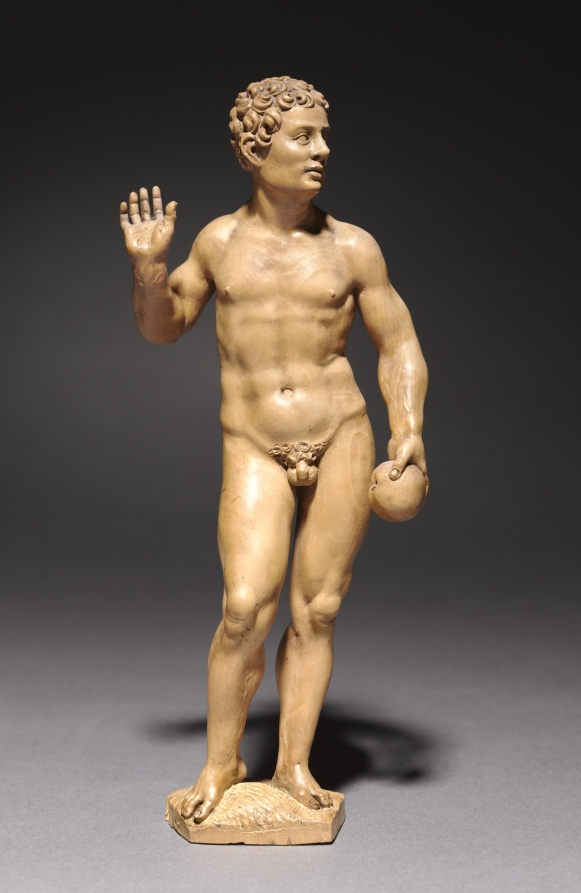
I. Foundational Dialectic: The Death of Socrates and the Jar (Hu) as Structural Precedents
The urban silhouette for Adam is not an exercise in trend adoption but a materialized philosophical stance. The dual DNA sources—Jacques-Louis David’s *The Death of Socrates* and the anonymous Chinese *Jar (Hu)*—present a productive tension: one is a narrative climax frozen in heroic torsion, the other a silent vessel embodying ontological stillness. For the 2026 NYC executive, this translates into a wardrobe architecture that rejects both theatrical excess and decorative inertia. The form must carry the gravity of a final gesture without succumbing to melodrama, and the surface must hold the quiet authority of aged glaze without lapsing into austerity.1.1 The Socratic Line: Tension as Tailoring Principle
David’s composition relies on diagonal vectors—Socrates’ outstretched arm, the tilted cup, the disciples’ reclining postures—to generate a visual field of controlled instability. In garment construction, this becomes the *draped shoulder seam* and the *asymmetrical closure*. For Adam, the tailored jacket is cut with a forward-pitched shoulder, 0.5 cm beyond the anatomical acromion, creating a line that suggests imminent motion yet remains anchored by a structured canvas. The lapel notch is deepened to 9 cm, echoing the philosopher’s hand gesture: a pointed, declarative angle that draws the eye upward. Trousers are cut with a slight taper from knee to hem, but the front crease is pressed off-center by 2 degrees, introducing a subtle, almost imperceptible torsion—a nod to the body’s final, reasoned turn toward the cup. The fabric weight is critical. A 380 GSM wool-cashmere blend with a 12% silk infusion provides the drape of a toga’s fold while maintaining the crisp memory of a tailored suit. The cloth’s inherent stiffness mimics the marble’s permanence, yet its fluidity under body heat allows for the “breath” of a living form. This is not costume; it is a structural argument that the executive’s body is both the vessel and the actor.1.2 The Hu Principle: Negative Space as Volume
The *Jar (Hu)* operates through absence—its belly swells not to contain but to define the void within. For Adam’s wardrobe, this translates into *garment ease* as a deliberate, philosophical quantity. The overcoat, a floor-length silhouette in slate melton wool, is cut with a 14 cm total ease at the chest, but this volume is disciplined by a high, curved armhole and a suppressed waist seam. The result is a shape that reads as a cylinder from the front, yet from the profile, it reveals a concave sweep—the “inner emptiness” of the jar made wearable. Sleeves are set with a 3 cm forward rotation, allowing the arm to move without disturbing the garment’s outer shell, much like the potter’s hand never touches the exterior while shaping the interior. This is the antithesis of the “power shoulder” of the 1980s. Here, volume is not aggressive; it is contemplative. The coat’s hem falls 2 cm above the ankle, exposing a precise sliver of the trouser break—a deliberate interruption that prevents the silhouette from becoming monolithic. The back vent is replaced by a *center seam with a 5 cm kick pleat*, which opens only during stride, revealing a flash of the lining in a darker slate. This is the “crack” in the glaze, the *kintsugi* line that acknowledges time’s passage without apology.II. Chromatic Logic: Slate as the Color of Rational Mortality
Slate is not a neutral; it is a composite of blue-grey, graphite, and a whisper of green—the color of wet stone, of the hemlock’s shadow, of the kiln’s cooled ash. For Adam, slate functions as the primary chromatic field because it holds both the *pathos* of the Socratic scene and the *emptiness* of the Hu’s glaze. It is a color that does not assert but *witnesses*.2.1 Layered Monochromy: The Executive’s Palette Architecture
The 2026 NYC executive operates in environments of fluorescent white, glass, and digital blue. Slate cuts through this noise with a frequency that is neither warm nor cold—it is *ambient*. The wardrobe is built on three tonal registers of slate: - **Deep Slate (Pantone 19-3906 TCX)**: Reserved for outer layers and tailored jackets. This is the “death” tone—the shadow of the cup, the philosopher’s robe at dusk. - **Mid Slate (Pantone 16-4006 TCX)**: Used for knitwear and trousers. This is the “dialogue” tone—the grey of marble veins, the space between figures. - **Pale Slate (Pantone 14-4502 TCX)**: Employed for shirting and inner layers. This is the “breath” tone—the light catching the jar’s rim, the moment before the hand reaches. The interaction between these tones is governed by a strict rule: no more than two registers per outfit, and the third must appear only as a 2 cm visible edge—a collar, a cuff, a hemline. This creates a visual rhythm of *statement, echo, and silence*, mirroring the Socratic dialogue’s structure of thesis, antithesis, and synthesis.2.2 Surface Treatment: The Glaze and the Grain
Color alone is insufficient; the *finish* must carry the philosophical weight. The slate wool is treated with a *nanotech water-repellent finish* that causes rain to bead and roll off—not as a performance of utility, but as a metaphor for the soul’s impermeability to bodily dissolution. The surface sheen is matte, with a 6% luster index, achieved through a double-brushed process that raises a micro-nap. This mimics the *jinsha* (gold-flecked) effect of Song dynasty tea bowls, where light is absorbed and re-emitted in irregular, non-directional patterns. For the tailored jacket, the lapels and collar are pressed with a *hot-fused interlining* that creates a subtle, almost invisible ridge—a “fault line” in the otherwise smooth surface. This ridge catches light at certain angles, recalling the cracks in the Hu’s glaze that reveal the clay body beneath. It is a deliberate imperfection, a *wabi-sabi* intervention that prevents the garment from becoming sterile.III. Synthesis: The 2026 Executive as a Moving Still Life
The final wardrobe for Adam is not a collection of garments but a *system of pauses*. Each piece is designed to be worn in a state of controlled stillness—standing at a window, seated in a boardroom, walking through a rain-slicked street. The silhouette does not shout; it *resonates*. The Socratic element provides the narrative tension—the sense that a decision is imminent, that the body is poised between action and reflection. The Hu element provides the ontological ground—the knowledge that the garment is a vessel, and the executive is both the contents and the emptiness. In practical terms, this means: - **The Overcoat** (slate melton, 140 cm length) is the primary statement. It is worn open, never buttoned, to preserve the “void” at the center. - **The Tailored Jacket** (deep slate, 2-button, forward shoulder) is the secondary layer, worn over a pale slate crewneck in 18-gauge merino. - **The Trousers** (mid slate, single pleat, tapered) are cut with a 22 cm hem, allowing for a clean break over a low-profile derby in unpolished black leather. Accessories are minimal: a stainless steel watch with a slate-grey dial (no numerals), a leather belt in undyed natural tan (the only non-slate element, serving as the “clay” beneath the glaze), and a pocket square in a matte, unbleached linen, folded into a perfect square—no puff, no peak. This is the *hu*’s lid, the final, silent seal. The result is a wardrobe that does not decorate the body but *frames its existential condition*. It acknowledges that the executive, like Socrates, is always one gesture away from the cup; and like the jar, is always already filled with the time that passes through. The slate color is not a choice; it is a necessity—the only hue that can hold both the drama of death and the stillness of a vessel without collapsing into sentimentality. This is the 2026 urban silhouette: not a look, but a *position*.
Technical Insight
NYC Perspective: Translating Slate tones into Minimalist silhouettes.