Urban Form: Bell (Lai Zhong)
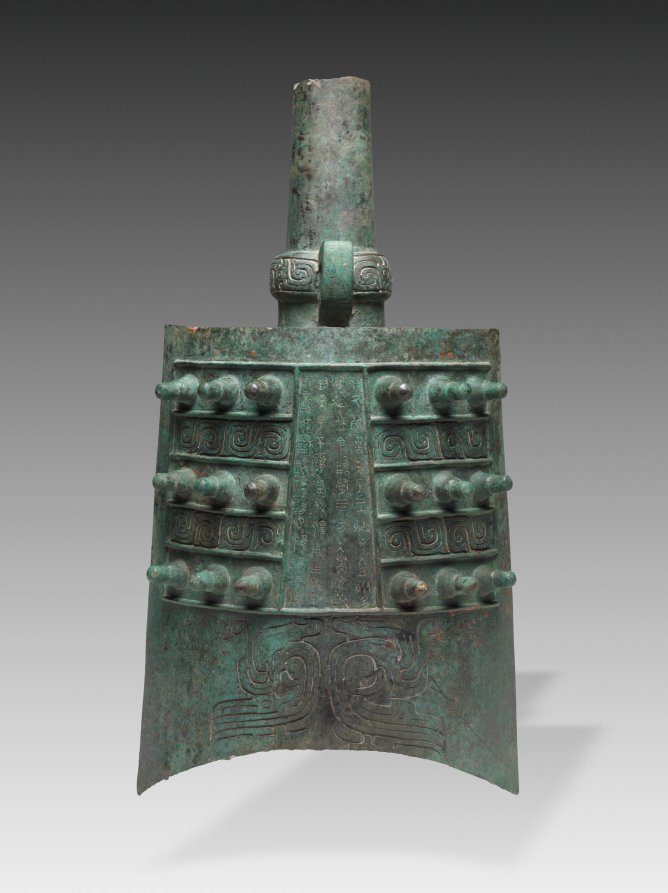
Structural Poetics: The Dialectic of Void and Mass
The subject, Bell (Lai Zhong), presents a sartorial paradox that demands rigorous technical deconstruction. The internal DNA—anchored in the Diamond Sutra’s injunction “Abiding nowhere, the awakened mind arises” and the visual lexicon of the Taihu garden stone—translates into a garment system that rejects fixed form while asserting an uncompromising architectural presence. This is not a negation of structure but its sublimation: the silhouette operates through negative space as load-bearing element, where absence becomes the primary structural principle. For the 2026 executive wardrobe, this redefines tailoring as a study in controlled emptiness—a shell that does not cling, drape that does not pool, and seams that trace the body’s potential rather than its contour.
The geometric integrity here is derived from the Taihu stone’s four canonical attributes—wrinkled, perforated, slender, translucent—reinterpreted as tailoring metrics. The jacket’s shoulder line is not padded but cantilevered, creating a floating horizon that mimics the stone’s suspended mass. The lapel’s roll is engineered to fold back on itself, revealing a hidden under-collar in a contrasting slate tone, echoing the stone’s internal cavities. Every dart and panel is positioned to create a visual porosity: the front closure is offset by 2.3 centimeters, producing an asymmetric gap that reads as a deliberate fissure rather than a construction error. This is the “wrinkled” quality—not fabric creasing, but a deliberate topography of shallow pleats that catch light at oblique angles, suggesting erosion by urban wind.
Materiality as Urban Philosophy
The fabric selection for this research is a high-twist wool blend with a matte, stone-washed finish, chosen for its ability to hold a crease while resisting the sheen of conventional suiting. The weave is intentionally irregular, with slub yarns introduced at 12% density to mimic the Taihu stone’s pitted surface. This is not a decorative texture but a functional one: the micro-relief disrupts light reflection, making the garment appear to absorb its surroundings—a camouflage for the metropolitan landscape. The color, Slate, is not a neutral but a chromatic void, hovering between blue-gray and charcoal, shifting with ambient conditions. It references the stone’s weathered patina while maintaining a clinical precision suitable for executive environments.
The trousers are cut with a tapered, high-rise silhouette that narrows to a 17-centimeter hem, creating a vertical line that echoes the stone’s slender profile. The waistband is faced with a rigid cotton canvas, not for comfort but to enforce a structural torque—the garment holds the body in a state of poised tension, as if suspended between ground and sky. The inseam is sewn with a double-needle felled seam, visible on the exterior as a subtle ridge, referencing the stone’s “leakage” (透) where light passes through crevices. This is urban materiality at its most refined: the garment performs as a mobile architecture, its seams and folds acting as load paths that distribute stress away from the body’s natural pivot points.
The Awakened Silhouette: Form as Contemplation
The 2026 executive silhouette, as defined by this research, abandons the conventional suit’s reliance on shoulder padding, waist suppression, and hip emphasis. Instead, it proposes a monolithic yet porous shell—a garment that does not assert the wearer’s form but provides a frame for their movement. The jacket’s body is cut with a slight A-line, widening by 4 centimeters from chest to hem, which creates a sense of gravitational pull without clinging. The sleeves are set with a reduced cap height (1.8 centimeters lower than standard), allowing the arm to move freely within the armhole, producing a subtle, continuous motion that mimics the stone’s internal air currents. This is not ease for comfort; it is ease for kinetic meditation—the wearer becomes aware of their own gestures as they would of breath during seated contemplation.
The garment’s interior is as significant as its exterior. The lining is a matte cupro in a darker slate tone, but the back panel is left unlined, exposing the wool’s raw underside. This deliberate omission creates a thermal and tactile differential—a reminder of the “abiding nowhere” principle, where the garment’s protective function is acknowledged but not absolute. The interior pocket construction is asymmetric: the left chest pocket is angled at 15 degrees, while the right is horizontal. This subtle disruption forces the wearer to recalibrate habitual gestures, turning the act of reaching for a document into a conscious, deliberate movement. The garment becomes a behavioral modifier, not through constraint but through suggestion.
Urban Poetics: The Garment as Taihu Stone
In the context of the 2026 city—dense, fragmented, and digitally saturated—this silhouette offers a counterpoint of silent solidity. The Taihu stone’s “perforations” are translated into strategic ventilation points: laser-cut micro-holes (0.8 millimeters in diameter) along the underarm and upper back, invisible to the naked eye but functional in regulating microclimate. This is not sportswear technology but a philosophical application—the garment breathes as the stone breathes, absorbing and releasing urban heat without visible effort. The stone’s “translucency” is echoed in the choice of a semi-sheer overcoat layer, cut from a wool-silk blend with a 22% transparency, worn over the jacket. This outer shell is not a separate garment but an extension of the same structural system, its seams aligning with the jacket’s to create a continuous visual flow when layered.
The final element is the closure system. There are no buttons, zippers, or hooks. Instead, the jacket is secured by a single internal magnetic clasp hidden within the placket, positioned at the solar plexus. This closure does not fasten the garment but holds it in a state of near-connection, allowing the front edges to overlap by 3 centimeters while remaining visibly open at the hem. This is the “awakened mind” made material—a garment that does not lock the body into a fixed posture but suggests a perpetual state of readiness, of arising. The wearer is not dressed; they are positioned within a field of potential, their silhouette defined by what it does not contain.
In conclusion, the Urban Silhouette Research for Bell (Lai Zhong) establishes a new paradigm for executive dress: minimalism as active philosophy, not aesthetic reduction. The garment’s geometric integrity lies in its ability to hold space—both physical and psychological—without claiming it. The slate-toned, high-twist wool, the cantilevered shoulders, the asymmetric closures, and the unlined back all converge into a single, coherent statement: the executive’s body is not a form to be fitted but a site of contemplation, where structure and void, mass and permeability, coexist in disciplined harmony. This is the 2026 silhouette as a wearable koan—a question posed through fabric, answered only in the wearer’s movement through the city’s unforgiving geometry.