Urban Form: Tapis (Garment)
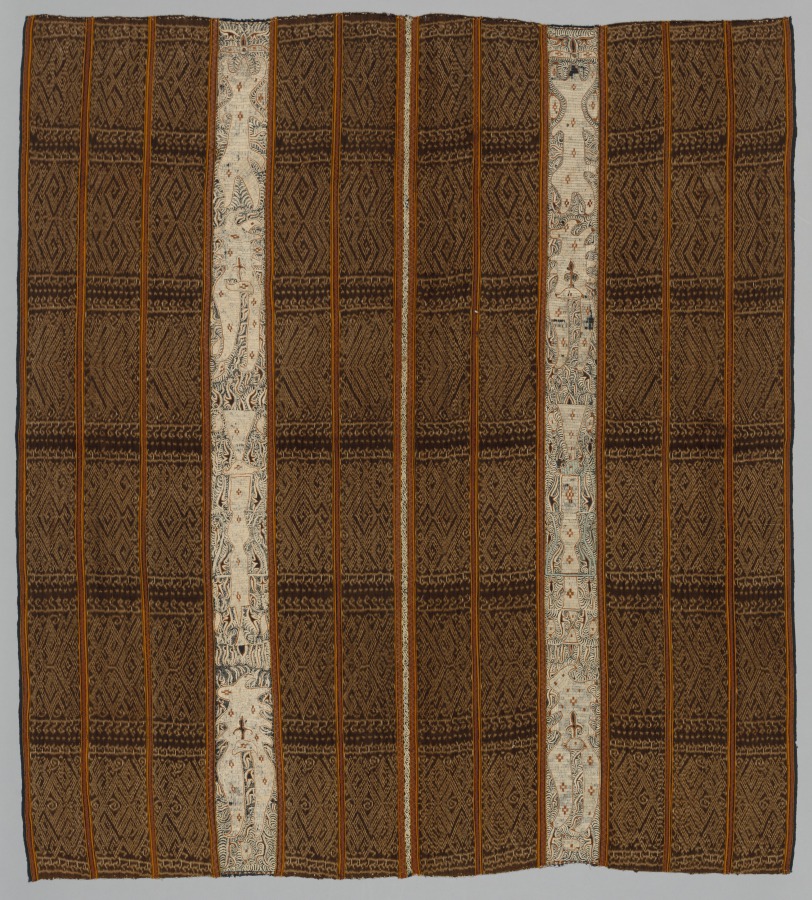
I. The Dialectical Frame: From Sacrificial Vessel to Phenomenological Void
The Tapis garment, as conceived for Addison Fashion’s 2026 Urban Silhouette Research, does not merely reference the visual lexicon of Jacques-Louis David’s The Death of Socrates and Giorgio Morandi’s Vases—it operationalizes their latent tension. David’s hemlock cup is a vessel of metaphysical extremity: its geometry is subordinated to narrative gravity, its cylindrical form compressed within a frieze-like composition that thrusts the viewer toward the philosopher’s outstretched arm. Morandi’s gray pots, by contrast, are stripped of all teleology. They exist as pure volumetric intervals, their muted surfaces absorbing light rather than emitting meaning. The Tapis translates this dialectic into wearable architecture: an oversized shell that simultaneously performs as a monument to classical gravitas and as a mute, self-contained object in the urban field.
The garment’s foundational cut derives from the negative space between David’s figures—the triangular void formed by Socrates’ raised hand, the cup, and the seated disciples. This is not a literal silhouette but a structural poetics of absence. The Tapis’s shoulder line extends beyond the anatomical frame, creating a horizontal datum that echoes the painting’s rigid perspectival grid. Yet the fabric’s fall—unstructured, almost gravitational—mirrors Morandi’s insistence on the object’s passive occupation of space. The result is a garment that holds narrative weight without succumbing to illustration. It is a vessel for the wearer’s own philosophical stance, not a costume of historical citation.
II. Geometric Integrity: The Architecture of the Fold and the Seam
Geometric integrity in the Tapis is not about symmetry but about controlled distortion. David’s composition relies on a rigorous one-point perspective that funnels the eye toward the cup—a vanishing point of moral clarity. The Tapis inverts this: its vanishing point is the wearer’s spine. A central back seam, cut on the bias, creates a subtle torsion that mimics the painting’s diagonal light shaft. This seam is not decorative; it is a load-bearing line that distributes the garment’s volume from the nape to the hem, ensuring that the oversized proportions do not collapse into formlessness. The front panels, meanwhile, are cut with a Morandian restraint—flat, unadorned, and slightly concave at the chest, as if the fabric were a plaster cast of a vessel’s belly.
The collar is the garment’s critical junction. It is neither a lapel nor a hood but a folded plane that rises from the shoulders like the rim of a ceramic jar. This collar can be worn upright, framing the face as a pedestal frames a bust—evoking David’s sculptural treatment of Socrates’ torso—or collapsed inward, allowing the neckline to become a soft, irregular ellipse. The latter state references Morandi’s pots, whose rims are never perfectly circular but always slightly warped by the artist’s hand. In the Tapis, this warp is achieved through a hidden interfacing that is thermally bonded to the wool, creating a memory of the fold that resists full flattening. The garment thus oscillates between two states of being: monumental and mute.
III. Urban Materiality: Slate as a Phenomenological Field
The color Slate is not a neutral choice but a material argument. David’s palette is theatrical—ochre, crimson, and chiaroscuro—yet the Tapis rejects this drama in favor of Morandi’s grayed tonalities. Slate, in this context, is the color of wet asphalt after rain, of concrete that has absorbed decades of urban light. It is a color that does not reflect but absorbs, much like Morandi’s pots absorb the studio’s diffused daylight. For the 2026 executive, this is a strategic retreat from the chromatic noise of corporate power dressing. Slate communicates not authority through spectacle but authority through imperturbable stillness.
The fabric itself is a double-faced wool gabardine, treated with a nano-coating that imparts a subtle, irregular sheen—reminiscent of the patina on Morandi’s ceramic surfaces. This is not a glossy finish; it is a micro-textural event that shifts with the wearer’s movement, revealing faint horizontal striations that echo the brushwork in David’s background architecture. The garment’s weight—approximately 680 grams per square meter—provides a gravitational pull that anchors the silhouette to the body, creating a sense of architectural permanence in transient urban environments. When the wearer walks, the fabric does not flutter; it folds in slow, deliberate creases, like the drapery of a classical statue in a museum’s climate-controlled air.
IV. Structural Poetics: The Tapis as a Portable Still Life
The Tapis’s most radical proposition is its treatment of the sleeve. Unlike conventional tailoring, which articulates the arm through a set-in cap, the Tapis uses a continuous sleeve that extends from the shoulder seam into a deep, unhemmed cuff. This construction references the chiton of David’s Socrates—a garment that drapes the body without cutting into it. The sleeve’s interior is lined with a silk-wool blend in a darker slate tone, visible only when the arm is raised. This hidden flash of depth is the garment’s equivalent of Morandi’s subtle tonal shifts—a quiet revelation that rewards prolonged observation.
The hem, too, is a study in negative geometry. It is cut asymmetrically, with the front falling two centimeters shorter than the back. This discrepancy is imperceptible at a glance but becomes apparent in motion, creating a slight, deliberate tilt in the silhouette—a nod to the off-kilter rims of Morandi’s vessels. The hem is weighted with a hidden chain, sewn into the lining, which ensures that the fabric falls in a straight, unbroken line even in wind. This is not a decorative flourish but a functional counterpoint to the garment’s volume, preventing the oversized form from becoming a billowing sail. The Tapis thus achieves what David’s composition achieves through geometry: a sense of inevitable, tragic balance.
V. The 2026 Executive Silhouette: Between Monument and Void
The 2026 executive silhouette, as defined by the Tapis, is one of deliberate withdrawal. It rejects the padded shoulders and nipped waists of power dressing, just as Morandi rejected the narrative bombast of history painting. Instead, it proposes a body that is present but not performative—a figure that occupies space with the quiet authority of a vessel that has no need to announce its contents. The Tapis’s oversized proportions are not about hiding the body but about redefining its relationship to the urban grid. The garment’s broad, flat planes echo the facades of modernist architecture; its vertical seams align with the rhythm of streetlights and window mullions. The wearer becomes a moving element within a larger composition, neither dominating nor submissive to the environment.
This is the garment’s ultimate synthesis of David and Morandi: the hemlock cup’s sacrificial clarity and the gray pot’s phenomenological silence are merged into a single, wearable object. The Tapis does not ask the wearer to choose between meaning and emptiness. It offers a third path—one where the garment itself becomes a threshold between the two. In the urban context, this translates to a professional who can embody both the gravity of decision-making and the detachment of observation. The Tapis is not a costume for action; it is a structure for contemplation, a portable still life that carries its own philosophical weight into the boardroom, the gallery, and the street.
In final analysis, the Tapis’s geometric integrity lies in its refusal to resolve the dialectic. The garment is neither fully David nor fully Morandi; it is a third term that emerges from their collision. Its oversized volume is a monument to the possibility of meaning, while its slate surface is a testament to the beauty of meaning’s withdrawal. For the 2026 executive, this is not a contradiction but a strategic advantage: the ability to hold space without asserting, to command attention without performing, to exist in the city as both a figure and a ground. The Tapis is the uniform of that paradox.