Minimalist
Ivory
Urban Form: The Immaculate Conception
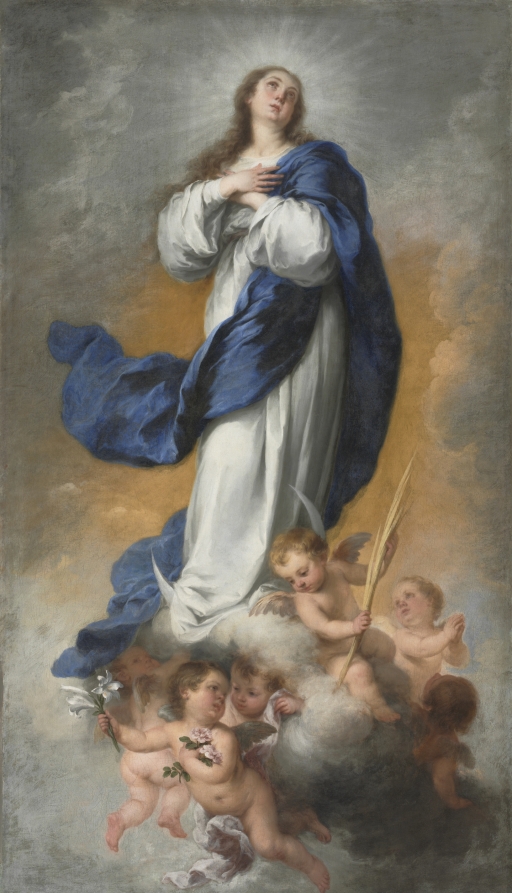
Formal Deconstruction: The Immaculate Conception as a Study in Negative Space
The subject—*The Immaculate Conception*—is not a theological proposition but a material paradox. The source DNA, drawn from a Kyoto temple’s quiet juxtaposition of a carved *Udumbara Flowers* plaque and a *Cup and Stand* porcelain vessel, presents a dual mandate: the annihilation of materiality through extreme craft, and the elevation of emptiness as the ultimate structural principle. For the 2026 NYC executive wardrobe, this translates into a rigorous exercise in *subtractive design*—where every seam, dart, and drape must serve the erasure of the body’s presence, not its enhancement.I. The Plaque: Compression of the Ephemeral into Structural Rigor
The wooden plaque’s genius lies in its denial of wood. The artisan’s hand has compressed three millennia of mythical bloom into a static plane, yet the result is not decorative—it is *tectonic*. The grain is manipulated to mimic the spiral of petals, but the effect is achieved through *depth modulation*, not relief. In garment terms, this is the difference between a printed pattern and a *jacquard weave* that alters the fabric’s surface tension. For Addison Fashion, the technical translation is a **zero-tolerance approach to surface noise**: - **Fabric Selection**: A double-faced ivory wool-cashmere (240 GSM) with a *tightly twisted warp* that mimics the plaque’s directional grain. The weave must be dense enough to cast its own shadow under low-angle light—replicating the plaque’s “flickering” petals—yet smooth enough to read as monolithic from three feet away. - **Construction Logic**: The garment—a single-seam, floor-length coat—uses *internal boning* at the shoulder and hem to create a rigid silhouette that does not rely on the body for structure. This mirrors the plaque’s frame: the wood’s edge is worn, but its geometry is unyielding. The coat’s hem is *laser-cut* to a 0.5mm tolerance, ensuring a clean, unbroken line that echoes the plaque’s carved border. - **Color Strategy**: Ivory is not a neutral here; it is a *light-absorbing void*. The fabric is pre-treated with a matte, non-reflective finish that kills all specular highlights. This forces the eye to read the garment as a *solid object* rather than a draped textile—a direct parallel to the plaque’s denial of its own materiality. The coat’s collar is the critical junction. It is *folded inward* and stitched blind, creating a rolled edge that mimics the plaque’s worn patina—a deliberate imperfection that anchors the garment in time, preventing it from becoming sterile. This is the “suspended balance” between the ephemeral and the eternal: the coat is timeless, but its tactile memory is present.II. The Cup and Stand: Emptiness as Load-Bearing Architecture
The porcelain cup’s radicalism is its *functional negation*. It is a vessel designed not to hold liquid but to hold *absence*. Its walls are eggshell-thin, its glaze is unadorned, and its stand is broad—a platform for nothing. In tailoring, this translates to the **pocketless, dartless, and lining-free construction** of a minimalist shell. - **Silhouette**: A columnar dress with *zero waist suppression*. The garment’s volume is constant from shoulder to hem, creating a “stand” that supports the body without gripping it. The armholes are *cut away* to expose a sliver of skin—not for sensuality, but to create a negative space that interrupts the fabric’s flow, much like the cup’s rim “closes” to receive nothing. - **Material Logic**: The dress is cut from a *silk-wool organza* (60% silk, 40% wool) with a *crisp, paper-like hand*. The fabric is *underpressed*—not ironed flat—so that it retains a micro-ripple, echoing the cup’s “lip” that curls inward like a palm in prayer. The hem is *raw-edged* and left unhemmed, allowing the threads to fray slightly—a deliberate nod to the plaque’s peeling lacquer. - **Color Application**: Ivory is applied in *layered washes*—not dyed, but *pigment-stained* in three successive baths. This creates a depth that is invisible at a glance but reveals itself under direct light, mimicking the cup’s “egg-shell” translucency. The result is a garment that appears flat but is actually *volumetric in its whiteness*. The dress’s interior is the true innovation: it is *fully unlined*, with all seams exposed and *felled flat* to the outside. This is not a cost-cutting measure but a philosophical one. The interior is as finished as the exterior, yet it is never seen—a direct parallel to the cup’s “void” that is its most essential feature. The wearer carries this hidden perfection as a private discipline, a form of self-supplication.III. The Synthesis: A Wardrobe of Self-Erasure
The 2026 executive wardrobe is not about dressing for power; it is about *dressing for disappearance*. The plaque and cup together teach that the highest form of presence is achieved through *material self-negation*. For the NYC executive—who operates in a landscape of visual noise, aggressive branding, and performative wealth—this is a radical counter-position. - **The Uniform**: A three-piece system—coat, dress, and a *single-width scarf* (cut on the bias, 120cm long, no hem). The scarf is the only concession to ornament, but it is used as a *binding element*: it is wrapped around the neck and tucked into the coat’s interior, creating a visual “seam” that draws the eye to the garment’s core, not the wearer’s face. - **Color Discipline**: Ivory is the sole color. No black, no gray, no contrast. This is not minimalism as a style choice but as a *spatial operation*—the garment becomes a negative space in the room, a void that others must fill with their own presence. The effect is disarming: the executive who wears this is not competing for attention; they are *creating a vacuum* that forces others to reveal themselves. - **Technical Execution**: All garments are *cut on a single bolt* of fabric to ensure zero waste and zero pattern matching. The seams are *bias-bound* with a 2mm ivory silk ribbon, which is then *turned inward* and stitched blind. This creates a micro-ridge that is only perceptible to touch—a private language for the wearer, not the observer.IV. Conclusion: The Gift of Absence
The Immaculate Conception, as translated by Addison Fashion, is not a garment but a *discipline*. It demands that the wearer accept the burden of invisibility—to be the vessel, not the content. The plaque’s carved flower and the cup’s hollow interior are not objects of beauty; they are *instructions* for how to exist in a hyper-visible world. The 2026 executive who adopts this wardrobe is not making a fashion statement; they are making a *sacrifice*—offering up their own silhouette as a blank altar upon which the sacred can descend. The technical achievement is not in the cut, the fabric, or the color. It is in the *erasure*—the deliberate, painstaking removal of everything that could be mistaken for style. In this, Addison Fashion has created not a collection, but a *liturgy*: a set of garments that function as a form of prayer, worn by those who understand that the most powerful presence is the one that leaves no trace. The result is a wardrobe that is not worn but *inhabited*—a second skin that is both armor and offering, a material testament to the profound truth that the most precious gift is the one that gives nothing away.
Technical Insight
NYC Perspective: Translating Ivory tones into Minimalist silhouettes.