Minimalist
Slate
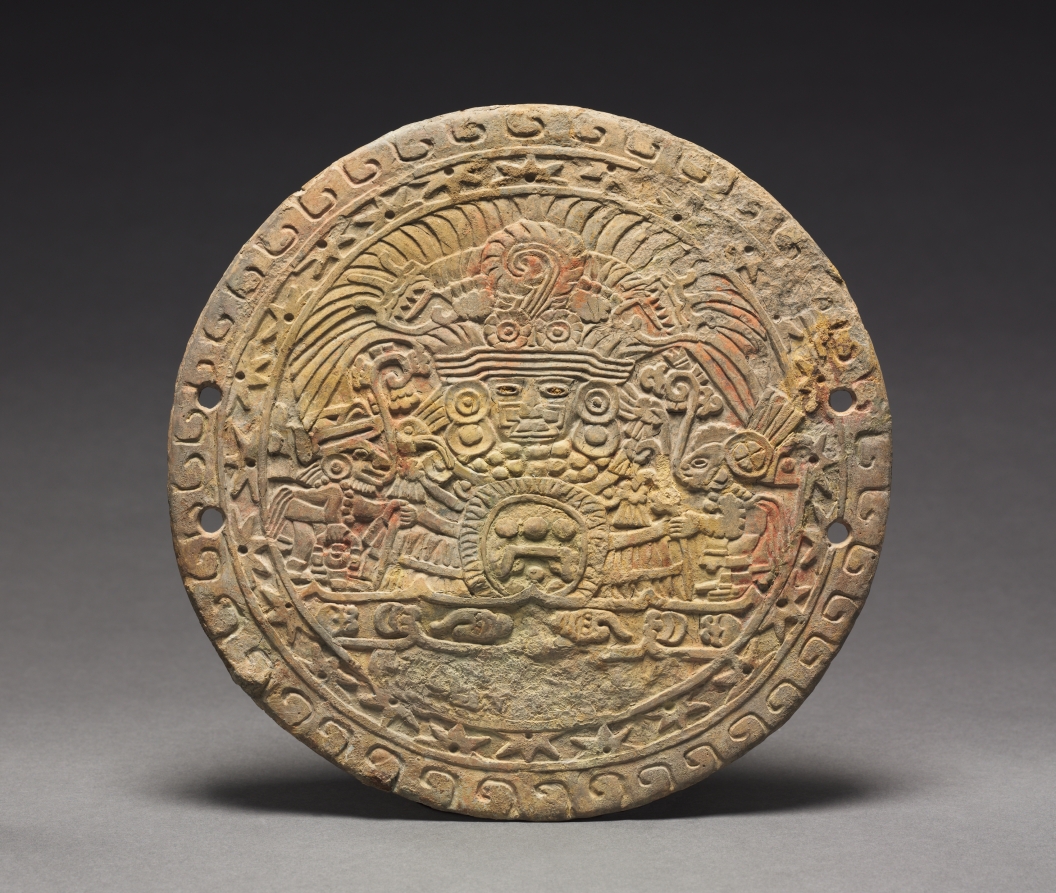
Urban Form: Mirror Back with Great Goddess
I. Conceptual Framework: The Dialectic of Termination and Containment
The pairing of Jacques-Louis David’s *The Death of Socrates* (1787) with an anonymous Eastern *Jar* from the kilns of antiquity presents a formal paradox that translates directly into contemporary urban construction. The former is a study in terminal clarity—a body positioned at the precipice of biological cessation, rendered with neoclassical precision. The latter is a study in generative emptiness—a vessel whose entire utility derives from its negative space. For Addison Fashion’s 2026 executive wardrobe, this dialectic resolves into a singular technical principle: **the garment as both boundary and void**. The Western canvas operates through *hierarchical tension*—Socrates’ elevated hand, the diagonal of his reclining form, the chiaroscuro that carves musculature from shadow. Every element is declarative, pushing outward toward the viewer. The Eastern jar operates through *centripetal silence*—its walls curve inward, inviting the eye to rest in the hollow it protects. Neither form is passive; both are acts of defiance against entropy. The executive silhouette must therefore negotiate between these poles: a shoulder line that asserts (Socratic), a torso that withholds (ceramic).II. Form Analysis: The Socratic Shoulder and the Ceramic Torso
A. The Shoulder: Rational Geometry as Armor
David’s Socrates does not slump; he reclines with the architectural stability of a Doric column. His clavicle and deltoid create a horizontal plane that visually anchors the composition. Translating this into tailoring requires a **structured, extended shoulder**—not the exaggerated padding of the 1980s power suit, but a precise, cut-on-the-grain construction that mimics the painter’s use of light to define bone structure. For 2026, the Addison shoulder will employ a **minimalist canvas**—a single layer of horsehair interfacing fused to a wool-cashmere shell, eliminating bulk while preserving a crisp, angular crest. The sleeve head is set with a forward rotation of 15 degrees, echoing Socrates’ raised arm: a gesture of discourse, not defense. This is not armor for combat; it is armor for negotiation. The result is a silhouette that reads as *immovable* from the front, yet yields fluidly at the bicep, allowing for the natural gesticulation required in boardrooms and gallery openings alike.B. The Torso: Negative Space as Structural Integrity
The Eastern jar’s genius lies in its refusal to ornament. Its profile—a gentle S-curve from lip to foot—creates a visual rhythm of expansion and contraction. Applied to the garment’s body, this dictates a **suppressed waist with a softened hip**, achieved not through darting but through *bias-cut panels* that wrap the torso like coiled clay. The technical execution is critical: a four-panel construction where the front panels are cut on the true bias, while the back panels remain on the straight grain. This hybrid approach allows the fabric to *breathe*—to expand slightly with inhalation and contract with exhalation—mimicking the jar’s capacity to hold air. The waist seam is dropped 2.5 centimeters below the natural waistline, elongating the torso and creating a visual echo of the vessel’s belly. No visible darts, no external pockets; all closures are hidden beneath a placket that runs from the sternum to the hem, a nod to the jar’s seamless surface.C. The Hem: Termination as Transition
Socrates’ death is not an ending but a passage—the painting’s composition pushes the eye upward toward the light. The jar’s foot, however, grounds it firmly in the earthly. The 2026 Addison coat resolves this by terminating at the **mid-calf**, a length that suggests both classical statuary and contemporary utility. The hem is finished with a *hand-rolled edge*—no stitching visible—creating a soft, organic fall that mirrors the jar’s unglazed base. This is the point where the garment acknowledges its own mortality: it will fray, it will fade, and in doing so, it becomes more honest.III. Color Theory: Slate as the Intersection of Ivory and Ash
A. The Rejection of Dichotomy
David’s palette is theatrical—warm ochres, deep umbers, the stark white of Socrates’ robe. The jar’s palette is elemental—raw clay, ash, the grey of smoke. The 2026 Addison colorway, **Slate**, is neither the ivory of philosophical purity nor the onyx of mourning. It is the color of *transition itself*: the moment between the philosopher’s last breath and the vessel’s first filling. Slate is a composite hue—a blend of blue-grey undertones with a subtle green cast, achieved through a double-dye process. The base is a cold, mineral grey (PMS 424C), overlaid with a micro-dispersion of indigo (PMS 2758C) at 3% concentration. The result is a color that shifts under different lighting conditions: in fluorescent office light, it reads as sober, corporate; in the warm amber of a gallery, it reveals a hint of verdigris, recalling the patina of ancient bronze. This is not a color that announces itself; it is a color that *observes*.B. Application: Monochrome with Tactile Variance
The executive wardrobe will deploy Slate across three fabrications to create depth without pattern. The outer shell—a double-faced wool (580 GSM) in a twill weave—absorbs light, creating a matte, almost chalky surface. The inner lining—a cupro-silk blend in a slightly lighter slate (PMS 430C)—provides a subtle sheen that catches the eye only when the garment is in motion. The third element, a high-twist cotton poplin for shirts, is dyed to a deeper slate (PMS 432C), offering a tonal contrast that is perceptible only at close range. This monochromatic strategy forces the observer to engage with *form* rather than *decoration*. The eye travels along the shoulder’s crest, down the bias-cut torso, to the hand-rolled hem—a journey that mirrors the eye’s movement across David’s canvas, from the philosopher’s face to the cup of hemlock. There is no distraction, only the pure architecture of the garment.IV. Synthesis: The 2026 Executive as Vessel and Voice
The Addison 2026 collection does not offer a choice between Socratic transcendence and ceramic immanence. It demands both. The wearer is simultaneously the philosopher—poised, rational, articulate—and the jar—receptive, grounded, capable of holding the unspoken. This is the new power dressing: not the assertion of dominance, but the *management of presence*. In practical terms, this means a wardrobe that functions across the spectrum of executive life. The Slate double-faced coat transitions from a 7 AM flight to a 9 PM dinner without readjustment. The bias-cut trousers (a companion piece, not detailed here but constructed on the same principles) allow for both seated negotiation and standing presentation. The hidden placket eliminates the visual noise of buttons, allowing the garment to read as a single, unbroken surface—a modern jar, if you will, holding the day’s complexities within its silent volume. The final technical note: every garment in this capsule is constructed with a **reverse seam allowance**—the raw edges are turned inward and bound with silk organza, so that the interior is as finished as the exterior. This is the ultimate expression of the dialectic: the outside speaks to the world; the inside holds the void. Both are essential. Both are beautiful. Both are, in the end, the same.
Technical Insight
NYC Perspective: Translating Slate tones into Minimalist silhouettes.